

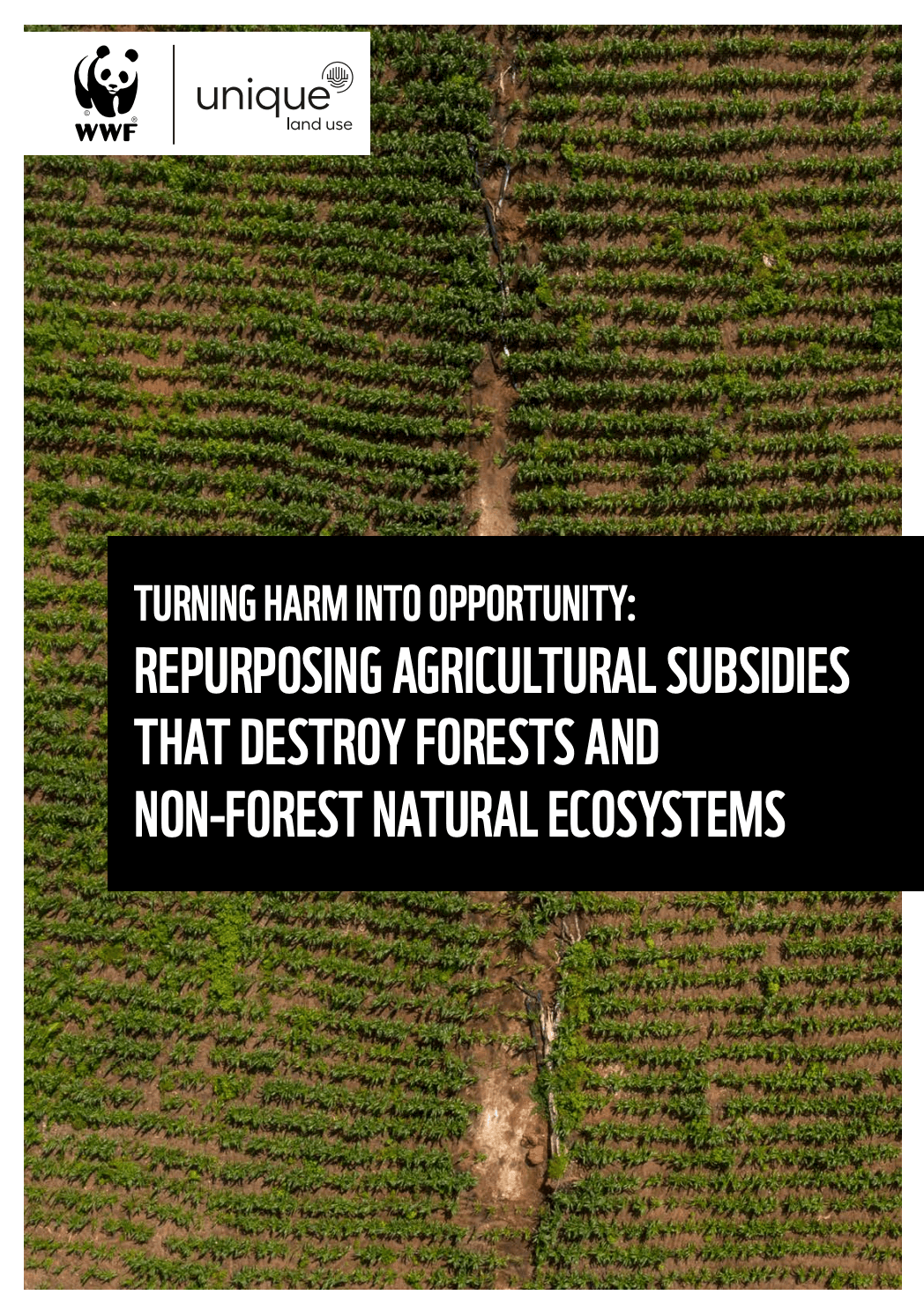
Turning harm into opportunity. Repurposing agriculturall subsidies that destroy forests and non-forests natural ecosystemas
Detalles
| Every year, governments spend about $470 billion on agricultural subsidies that harm forests and other natural ecosystems and contribute to biodiversity loss. Around the world, there is increasing attention to the need to repurpose these types of subsidies and create incentives that can have a positive impact on food production and nature conservation, while supporting more sustainable, equitable and just food systems. WWF's report Turning harm into opportunity: Repurposing Agricultural Subsidies that Destroy Forests and Non-Forest Natural Ecosystems examines the impact of subsidies on deforestation and the conversion of non-forest natural ecosystems, building on lessons learned in Brazil and Malawi. The report also provides a framework for assessing the feasibility and impacts of redirecting environmentally harmful agricultural subsidies towards forest conservation, land and forest restoration, and sustainable land-use practices. |
Recursos relacionados
WBCSD’s TNFD pilot
This resource provides a synthesis of the WBCSD Working Group on Nature-Related Financial Disclosures (TNFD) pilot process, summarizing the pilot…
Pathways for measuring biodiversity outcomes of biodiversity credits
The aim of this thematic report is to synthesize the available resources on how to measure biodiversity credits, to check…