


Detalles
| The mission of the Kunming-Montreal Global Biodiversity Framework (GBF) is to halt and reverse biodiversity loss by 2030, with the goal of making the world live in harmony with nature by 2050. Carrying out the transition implied by this international agreement requires significant changes in business practices in all sectors. Therefore, a wilderness transition plan—as defined in the discussion paper—sets out an organization's objectives, goals, actions, accountability mechanisms, and resources to respond to and contribute to the transition that MGB entails. This publication is a discussion paper that sets out draft guidance on wilderness transition planning for companies and financial institutions developing and disseminating a transition plan. The document covers all aspects of nature, except climate change and greenhouse gas emissions as drivers of nature loss, and natural carbon stocks. Transition planning for these issues is covered in the guidance of organizations such as GFANZ. The TNFD has collaborated in the preparation of this document with other initiatives and partners, such as GFANZ, Transition Plan Taskforce, SBTN, Business for Nature and WWF. Main areas of interest
|
Recursos relacionados
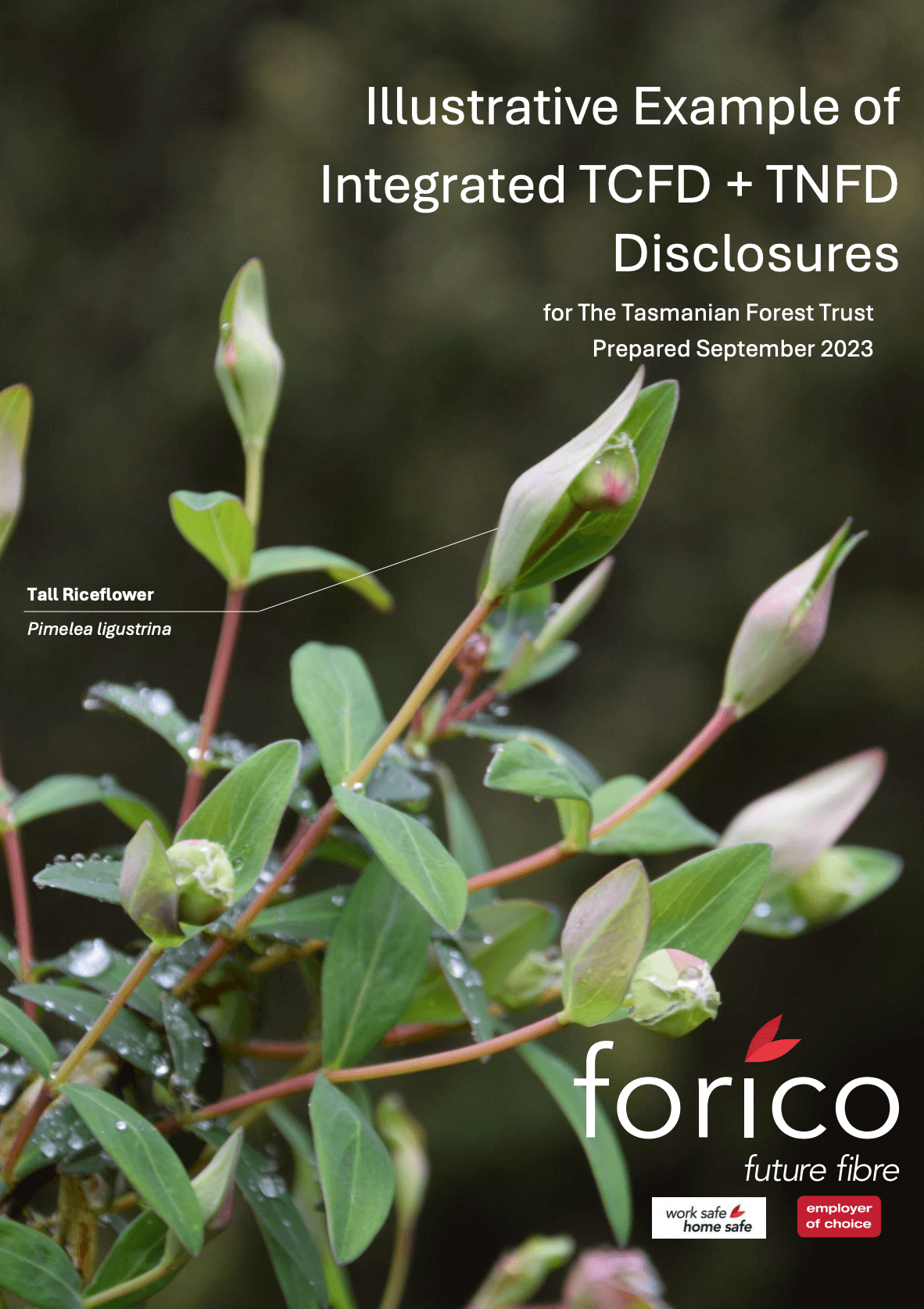
Integrated TCFD + TNFD Disclosures for The Tasmanian Forest Trust
Australian forestry company Forico has collaborated with the TNFD to produce an illustrative integrated disclosure report to show how the…
Biodiversity Insights 2024
The topics addressed in Biodiversity Insights 2024 are:Making the case for investing in natural capitalNatural Capital Outlook 2024: Information, Restoration…
2026
Private Finance for Biodiversity.Good Practices in Unlocking Capital for Nature
El informe de la OCDE señala que la pérdida de biodiversidad constituye también un riesgo económico y financiero. Existe una…