

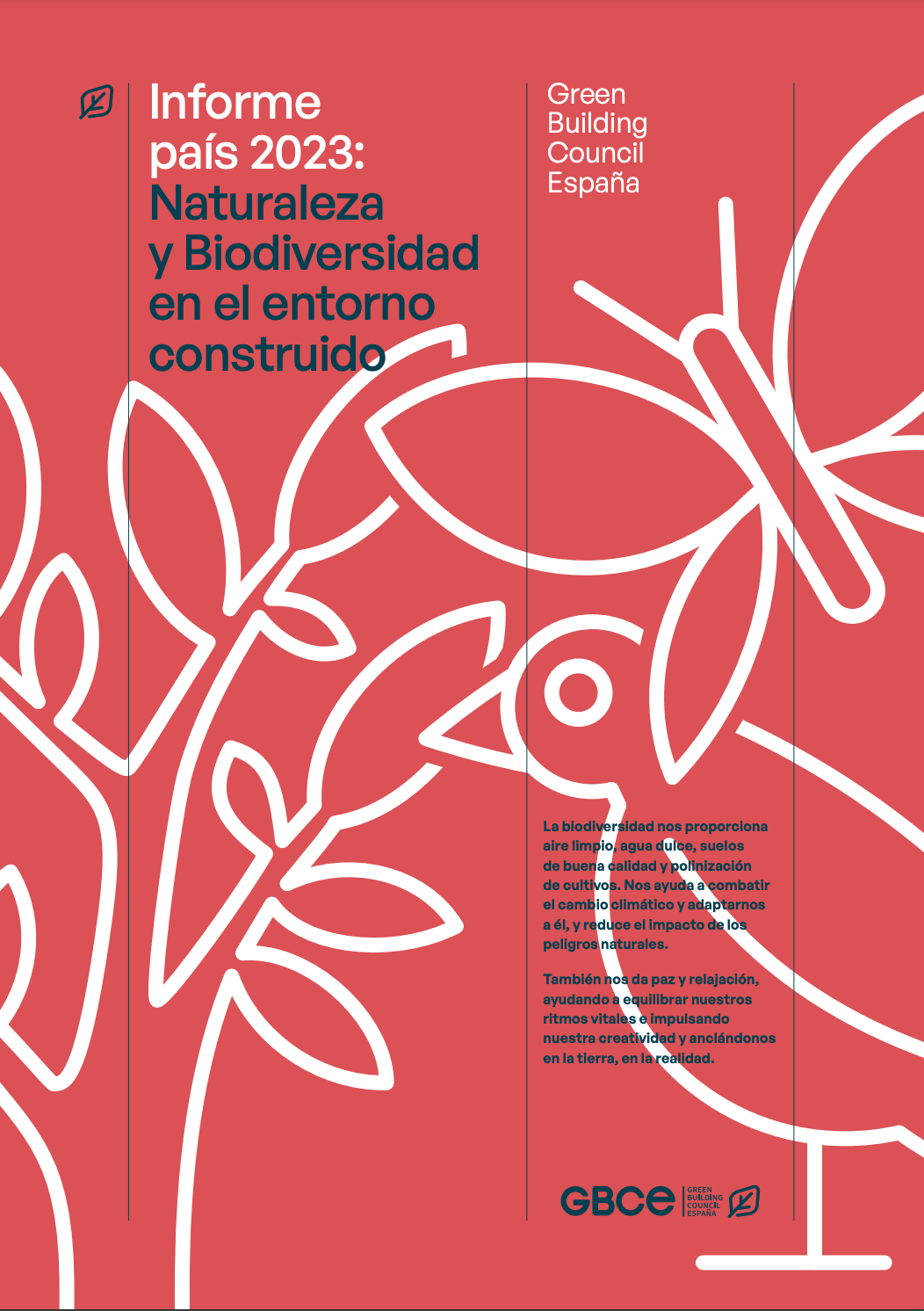
Country Report 2023: Nature and Biodiversity in the Built Environment
Detalles
| The planetary limit of biodiversity, both in terms of species disappearance – genetic loss – and functionality, presents a much greater level of urgency and degradation than climate change. This is stated in the GBCe Country Report 2023: Nature and biodiversity, by Green Building Council Spain (GBCe), which specifies that seven out of 10 species of wild animals have disappeared since 1970 – according to WWF data – and that of the eight million species that exist, one million are in danger of extinction and could end up becoming extinct in a few decades – according to the UN. Changes in land use, overexploitation, pollution, invasive alien species and climate change are the five direct drivers of biodiversity loss, the document highlights. These direct drivers, along with a number of underlying causes – indirect drivers – including production and consumption habits, human population dynamics and trends, trade, technological innovations and governance systems, are responsible for biodiversity loss – as specified by the Intergovernmental Science-Policy Platform on Biodiversity and Ecosystem Services (IPBES). The report addresses the situation of buildings in the face of the challenge of biodiversity, and highlights that, in terms of buildings, it is necessary to differentiate biodiversity inside and outside cities. Building is having an impact on what is not seen, on what is outside the cities, changing land use on a large scale for the extraction of raw materials, the deforestation of large areas for the use of wood without a chain of custody and, above all, polluting ecosystems due to emissions from factories. buildings, etc. In addition, large amounts of water are being consumed outside cities to manufacture materials required within cities, so it is necessary that the prescription of these materials takes into account the impact they have on biodiversity. Faced with this scenario, a new way of relating to nature is necessary that takes into account the functions it offers us as a support for life and that moves away from the conception of economic progress based on GDP. |
Recursos relacionados
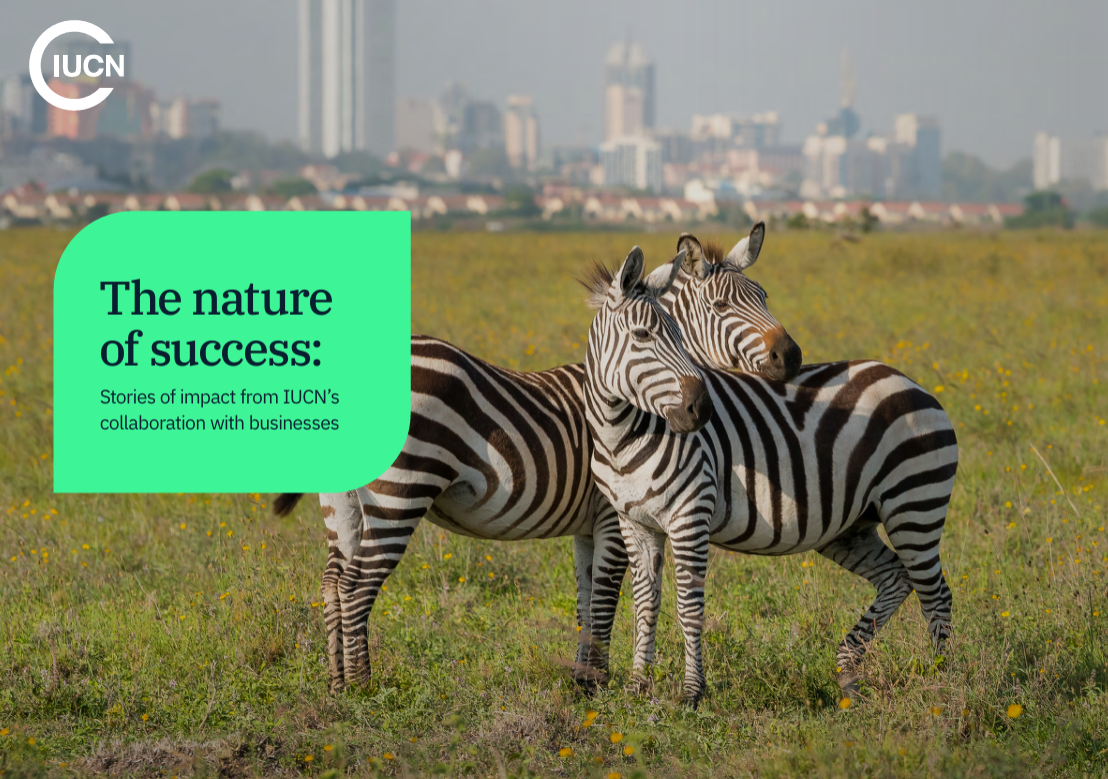
The nature of success: Stories of impact from IUCN’s collaboration with businesses
This publication shows a portfolio of collaborative projects between IUCN and the private sector in the field of nature.
2022
Identifying and assessing subsidies and other incentives harmful to biodiversity: A comparative review of existing national-level assessments and insights for good practice
Una detallada comparación de los estudios nacionales existentes para identificar y evaluar las subvenciones y otros incentivos dañinos para la…
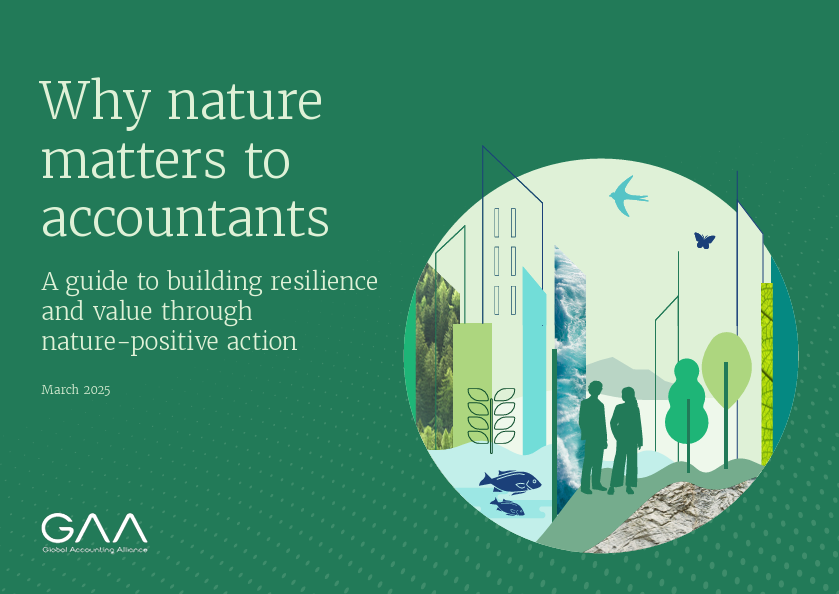
Why nature matters to accountants: A guide to building resilience and value through nature-positive action
This guide provides accounting professionals with basic knowledge and practical steps to start integrating nature into their field of work.