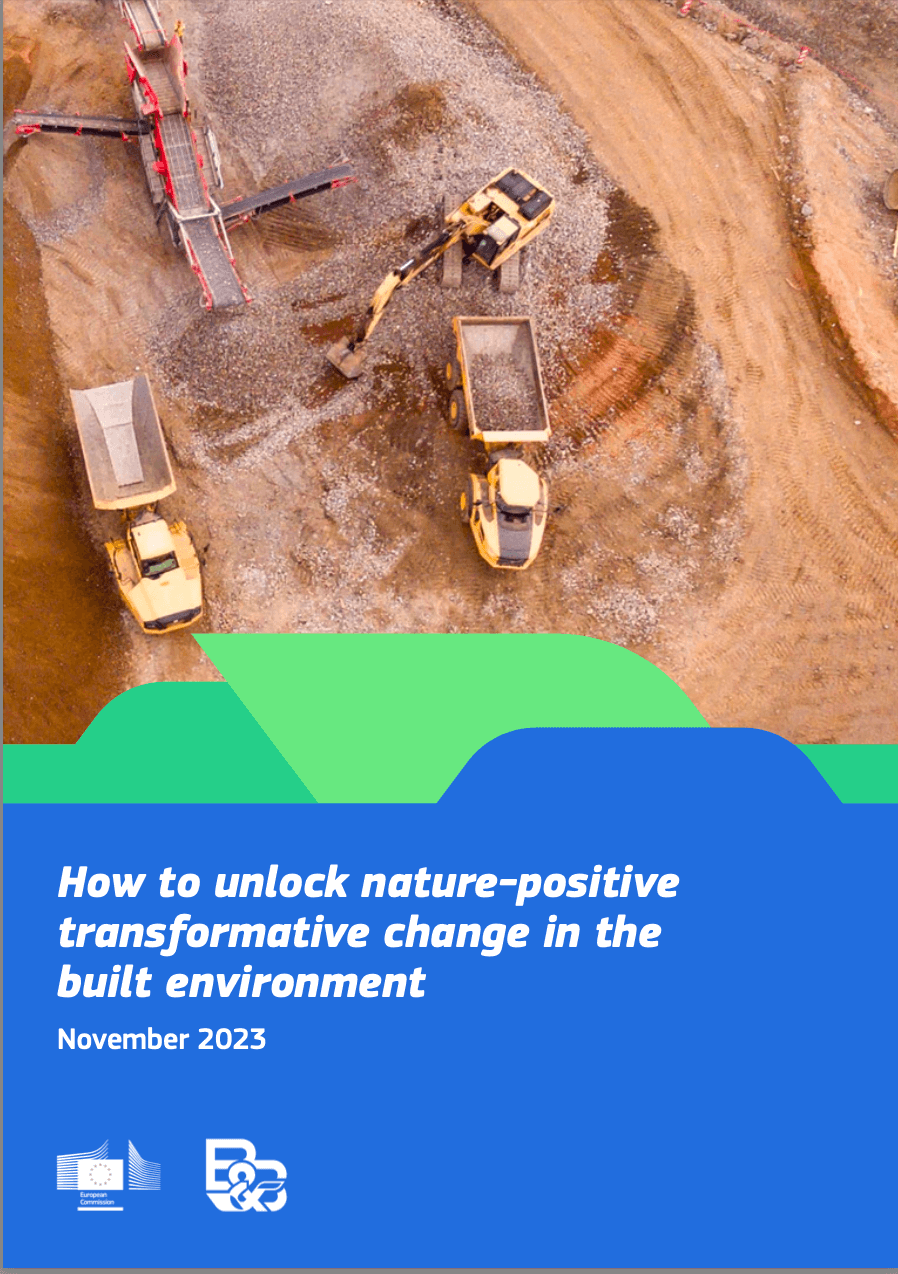
Detalles
The built environment contributes to biodiversity loss, particularly through changes in land use, alterations to the water cycle, unsustainable supply of a wide range of building materials, pollution, and contributions to climate change. Recognizing these impacts, leading companies and financiers have begun to incorporate nature-positive principles into their operations, business models, and corporate engagement strategies. However, there are still many obstacles and challenges related to technology, governance, financing and policy issues for these to reach their potential and contribute to the nature-positive goal at scale. Solving these key challenges requires collective action involving business, finance, and policy. |
Recursos relacionados
Effective Nature Work. Lessons learned and experiences from the pilot
This publication brings together the experiences and lessons learned from project participants in the pilot of science-based targets for nature.…
The Development, Climate, and Nature Crisis : Solutions to End Poverty on a Livable Planet – Insights from World Bank Country Climate and Development Reports covering 42 economies
The World Economic Forum ranked biodiversity and ecosystem collapse as the third most serious global risk in the next ten…