

Towards A New Economic Paradigm 2.0: Innovating to integrate decision-making across nature, people, society and the economy

Detalles
The world economy is undergoing a rapid transformation. Fluctuating global value chains grapple with climate change, biodiversity loss, and persistent social inequalities. We have reached a tipping point where, after centuries of continuous growth, we are learning that we cannot borrow indefinitely the natural resources of other geographies and future generations (or, for that matter, of current generations). But there's good news. Capturing our natural, social and human capital together with the (financial) capitals produced is a growing trend among business leaders, investors and policymakers. These capitals honor what really matters to us: nature and people. When these capitals are valued and accounted for at the core of every government and company, and are not set aside as externalities, they completely change the way decisions are made. This is how we protect the people, places, and institutions we hold dear from harm. |
Recursos relacionados
Biodiversity Insight 2023
La edición 2023 del informe "Biodiversity Insight" de Environmental Finance muestra cómo los principales actores del ecosistema de inversión ESG,…
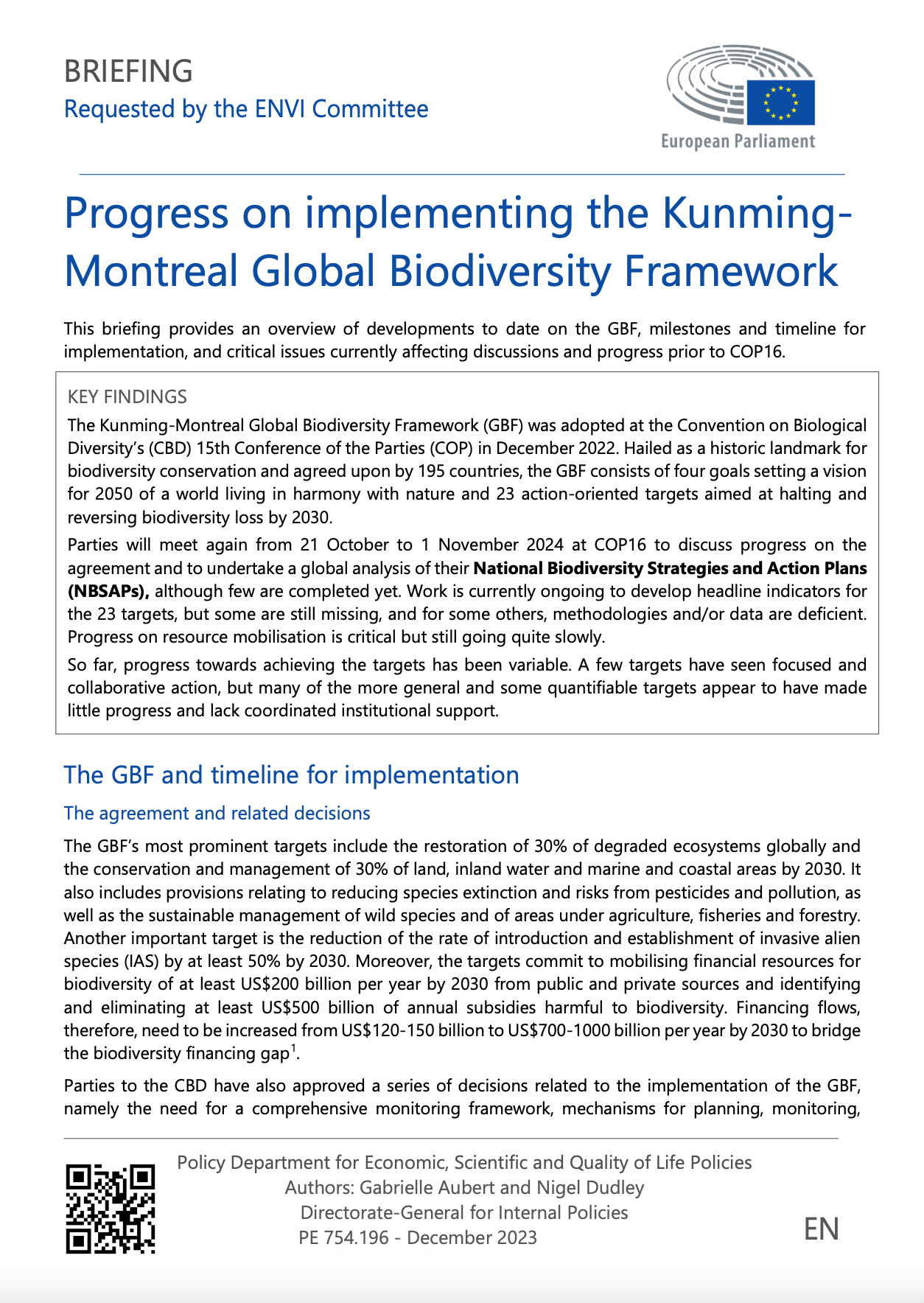
Progress on implementing the KunmingMontreal Global Biodiversity Framework
The Kunming-Montreal Global Biodiversity Framework (GDF) was adopted at the 15th Conference of the Parties (COP) to the Convention on…
Scaling Up Private Action for Nature
El informe analiza cómo aumentar la participación del sector privado y la financiación privada en la conservación de la biodiversidad,…