

Reviving Europe’s rivers: Seven challenges in the implementation of the Nature Restoration Law to restore free-flowing rivers
Detalles
| The EU Nature Restoration Act represents an important opportunity for the restoration of freshwater habitats and, consequently, for the protection of freshwater biodiversity. However, a number of challenges must be foreseen in its implementation, which can compromise its success. Some aspects, particularly those relating to freshwater ecosystems, require further clarification. This research uses river ecosystems to illustrate the ambiguities in the proposed legislation and the potential consequences of leaving these aspects open to interpretation during the implementation process. It also discusses possible solutions to these problems that could help ensure compliance with the law's objectives. The authors argue that the structure of the river network and the dimensions of connectivity, which give rise to river metaecosystems, should be explicitly taken into account. To this end, they call for clear definitions of the critical terms "free-flowing rivers", "barriers" and "reference areas", and recommend the development of integrated assessment methods for connectivity between river networks. This is a key property of river ecosystems that should be used to prioritise actions to increase the length and number of rivers. Proper restoration planning at larger spatial scales will benefit from a meta-ecosystem perspective and an accurate representation of water-land linkages, significantly improving the effectiveness of restoration efforts. In addition, citizen and stakeholder participation offers important opportunities at local, national and European level, and should be encouraged to ensure inclusive decision-making. The conservation challenges outlined here are especially important for rivers, but they also have implications for other ecosystems. These considerations are useful for policymakers, conservationists, and other stakeholders in the Nature Restoration Act and other related policy initiatives. |
Recursos relacionados
Recommendations for scaling finance for NbS
This document provides the G20 Working Group on Sustainable Finance (SFWG) with recommendations on regulatory frameworks that can scale up…
Instrumentos de financiación para la naturaleza. Aplicación en procesos de custodia del territorio
Este informe analiza los instrumentos de financiación aplicables a la conservación y restauración de la naturaleza, prestando especial atención en…
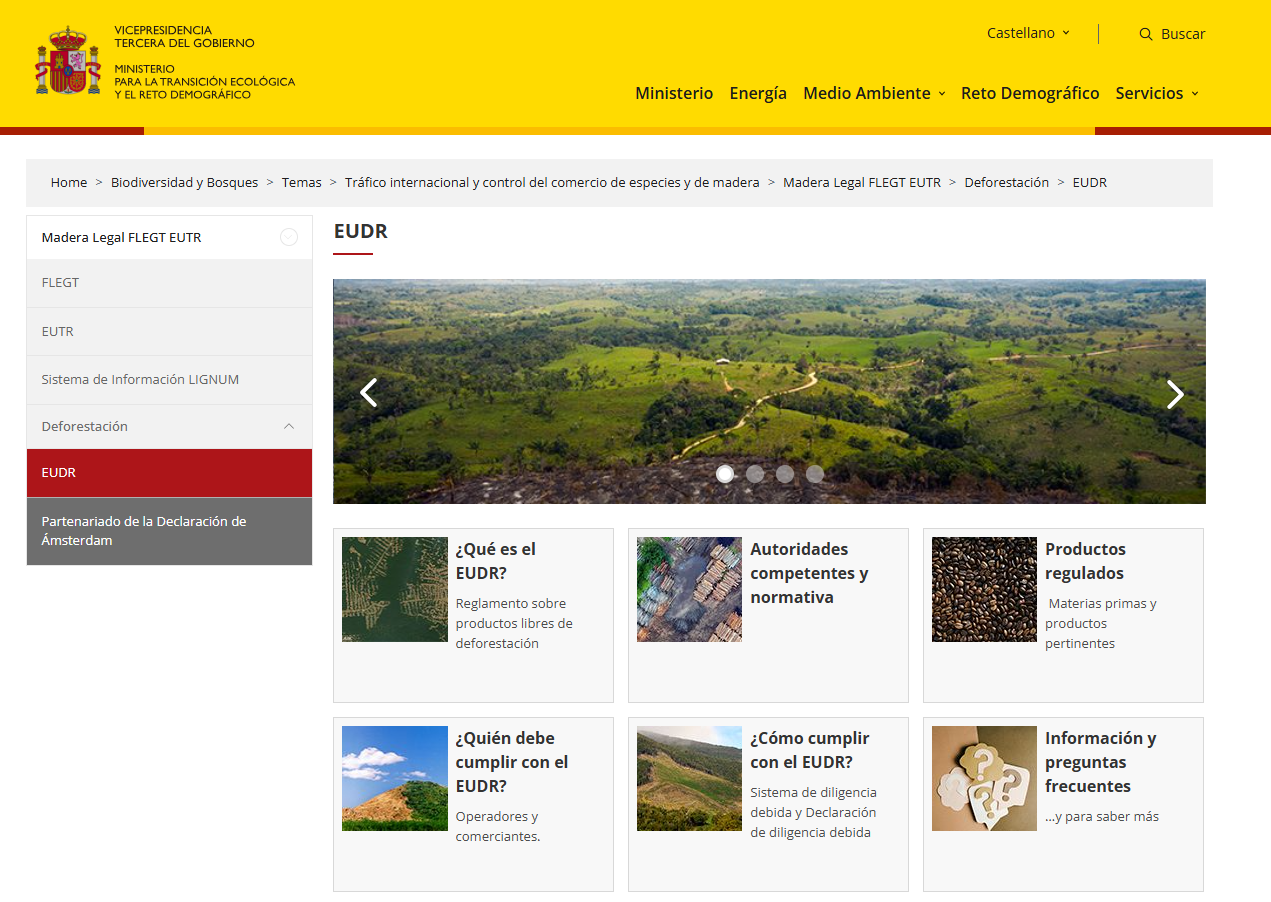
EUDR website
This website contains updated information on Regulation (EU) 2023/1115 of the European Parliament and of the Council of 31 May…