

Over 80% of the European Union’s marine protected area only marginally regulates human activities
Detalles
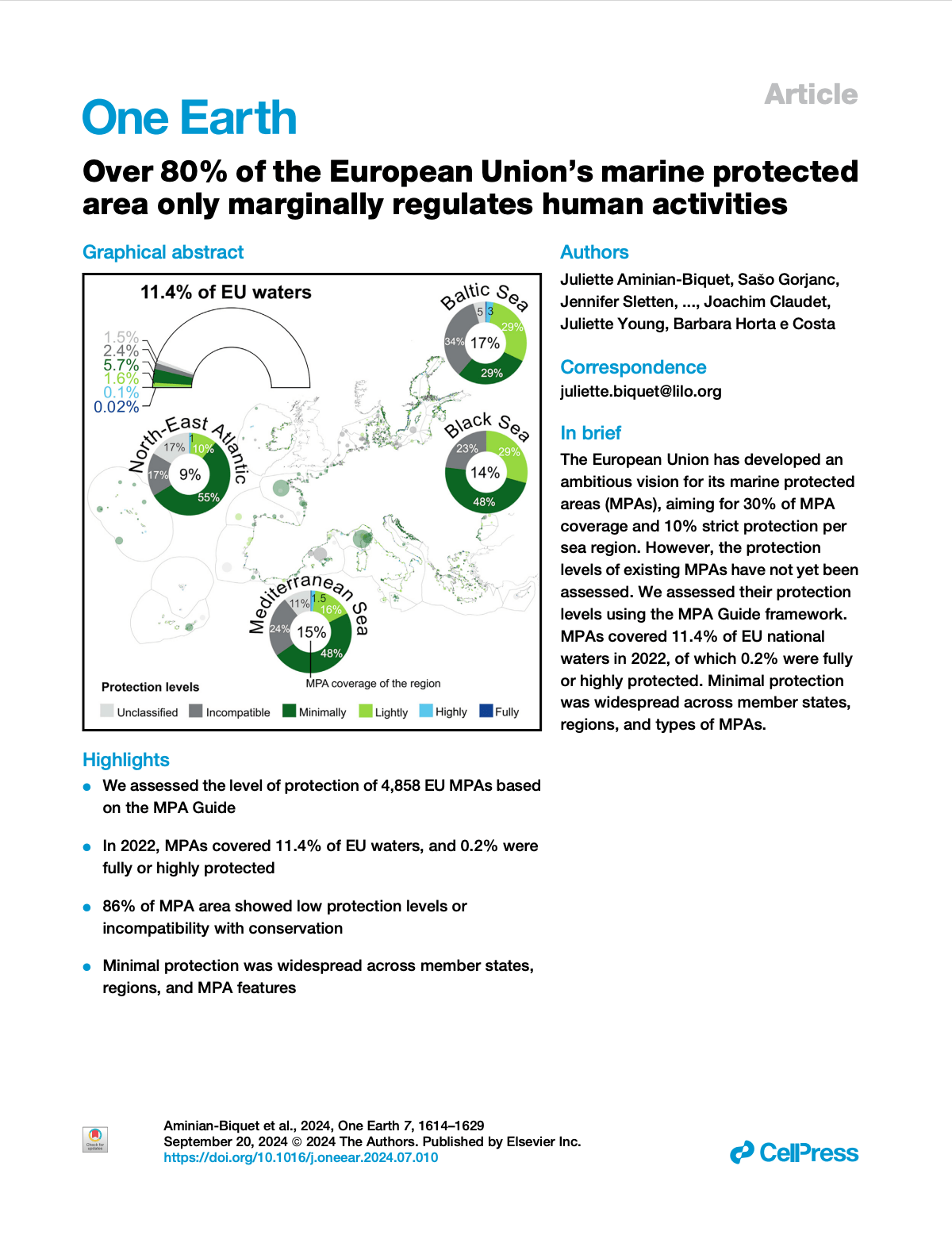
Our oceans guarantee our food, climate regulation and well-being, but they are greatly threatened by heatwaves, overfishing and the destruction of ecosystems caused by ever-expanding human activities. The European Union (EU) and its member states have designated marine protected areas (MPAs) as areas where the protection of marine biodiversity is a priority. The authors of this publication have identified that in 2022, 86% of the 11.4% of EU waters covered by MPAs showed light, minimal or no protection against the most harmful human activities, such as dredging, mining or the most destructive fishing gear. For EU MPAs to protect marine biodiversity, there is an urgent need to expand their toolkit to reduce pressures on marine ecosystems by regulating activities more broadly, thereby increasing their level of protection. The results of this research raise the question of how MPAs have been used and what decision-making processes would allow for the definition of common rules that guarantee the future of our livelihoods and ecosystems within and beyond the boundaries of MPAs. |
Recursos relacionados
Guide to the CSRD Corporate Sustainability Reporting Directive
With the beginning of 2024, the Corporate Sustainability Reporting Directive (CSRD) comes into force, a European regulation that establishes environmental,…
The positive impact of conservation action
The current biodiversity crisis calls for action to protect species from extinction and ecosystems from serious degradation. As a result,…
“Guidelines on the management of environmental, social and governance (ESG) risks “
In this report, the European Banking Authority (EBA) sets out its final Guidelines on the management of environmental, social and…