

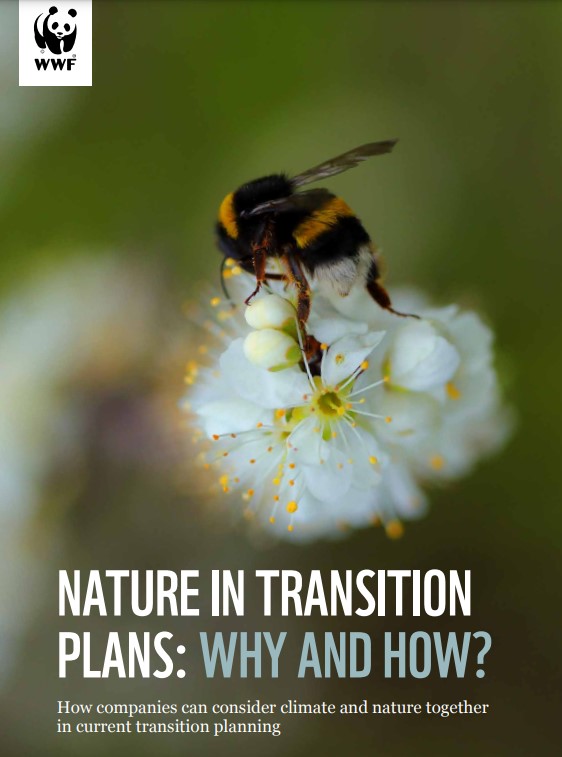
Nature in transition plans: Why and how? How companies can consider climate and nature together in current transition planning
Detalles
This WWF report provides guidance for seizing the critical opportunity of transition planning to deliver joint solutions to climate change and nature loss. Climate change and biodiversity are mutually reinforcing. Nature is vital for climate mitigation, adaptation, and resilience, while mitigation-focused interventions can harm nature, therefore climate and nature must be addressed together in a comprehensive manner. The paper proposes that companies take a step-by-step approach to integrating nature into existing transition planning frameworks:
1) Integrate nature into its climate transition planning to support the implementation of the Paris Agreement.
2) Align transition plans with the nature-positive objectives of the Kunming-Montreal Biodiversity Framework agreed at COP 15, or similar agreements. The first could refer, for example, to investing in nature-based climate solutions, such as the restoration of natural carbon sinks (forests or peatlands), and implementing safeguards to assess and prevent damage to nature arising from climate transition plan activities.
The latter could include building a solid understanding of the business's major impacts on nature, mitigating such negative impacts and aligning business activities with global commitments to nature.
Recursos relacionados
A Compendium of Market Practices. How the EU’s Taxonomy and sustainable finance framework are helping financial and non-financial actors transition to net zero
La Plataforma de Finanzas Sostenibles, organismo asesor de la Comisión Europea, ha publicado este informe sobre un compendio de prácticas…
Guide to integrating biodiversity into business
This document offers guidelines and real experiences of how to incorporate nature into business management.

Mainstreaming Biodiversity into Renewable Power Infrastructure
As countries step up climate action, they face the challenge of scaling up renewable energy while tackling biodiversity loss. Moving…