

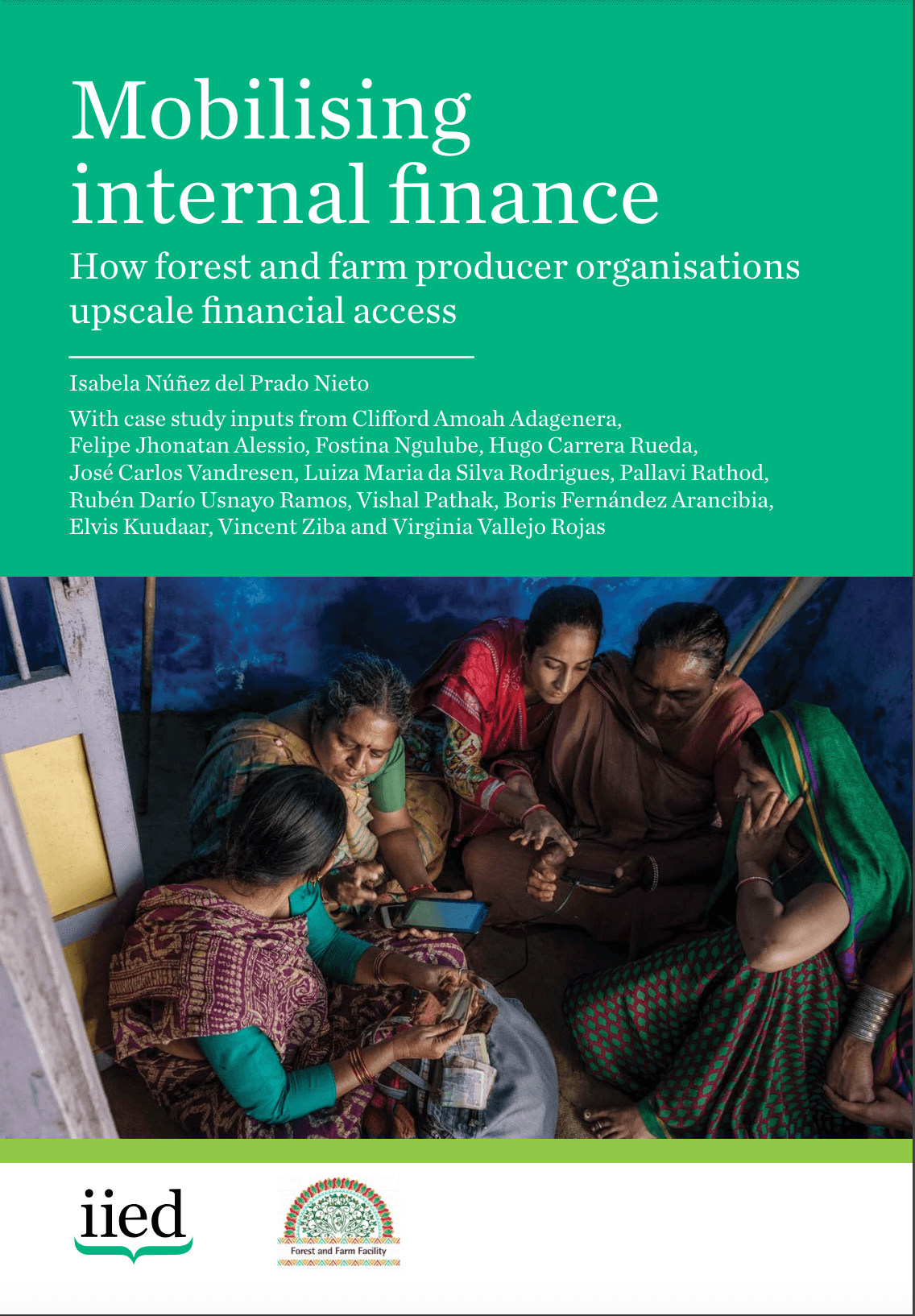
Mobilising internal finance: how forest and farm producer organisations upscale financial access
Detalles
| Access to finance for rural communities composed of smallholders, family farmers and indigenous peoples is very limited. Smallholder farmers and family farmers account for 90% of the world's farms and are estimated to be responsible for 80% of global food production. The funding gap makes it difficult for these rural communities to act effectively in relation to climate, nature, livelihoods and food security. This research report delves into the critical role that Forest and Agricultural Producer Organizations (OPFHs) play in mobilizing domestic funding to close this gap. By examining case studies from six countries, this report sheds light on how OPFH can effectively leverage domestic resources to provide financial services to their members, ultimately enabling sustainable development. It outlines a set of practical steps that FFPOs follow to establish internal financial mechanisms, such as savings groups and financial cooperatives. These are accessible, trust-based financial mechanisms that meet the diverse needs of members, strengthen solidarity, empower women, increase resilience to climate change, and finance sustainable and productive activities, often on a large scale. |
Recursos relacionados
Managing nature risks and investing in the opportunities top tips for pension fund charis and trustees
Accounting for Sustainability provides advice for pension fund presidents and managers on how to consider nature in their decision-making.In his…
TNFD sector guidance – Marine transportation and cruise lines
This sectoral guide aims to help organizations with business models and/or value chains in the maritime transport and cruise sectors…
The Deforestation Action Tracker 2023: An essential stocktake of finance sector action
The report is based on the assessments of more than 700 financial institutions on their actions on deforestation, conversion and…