

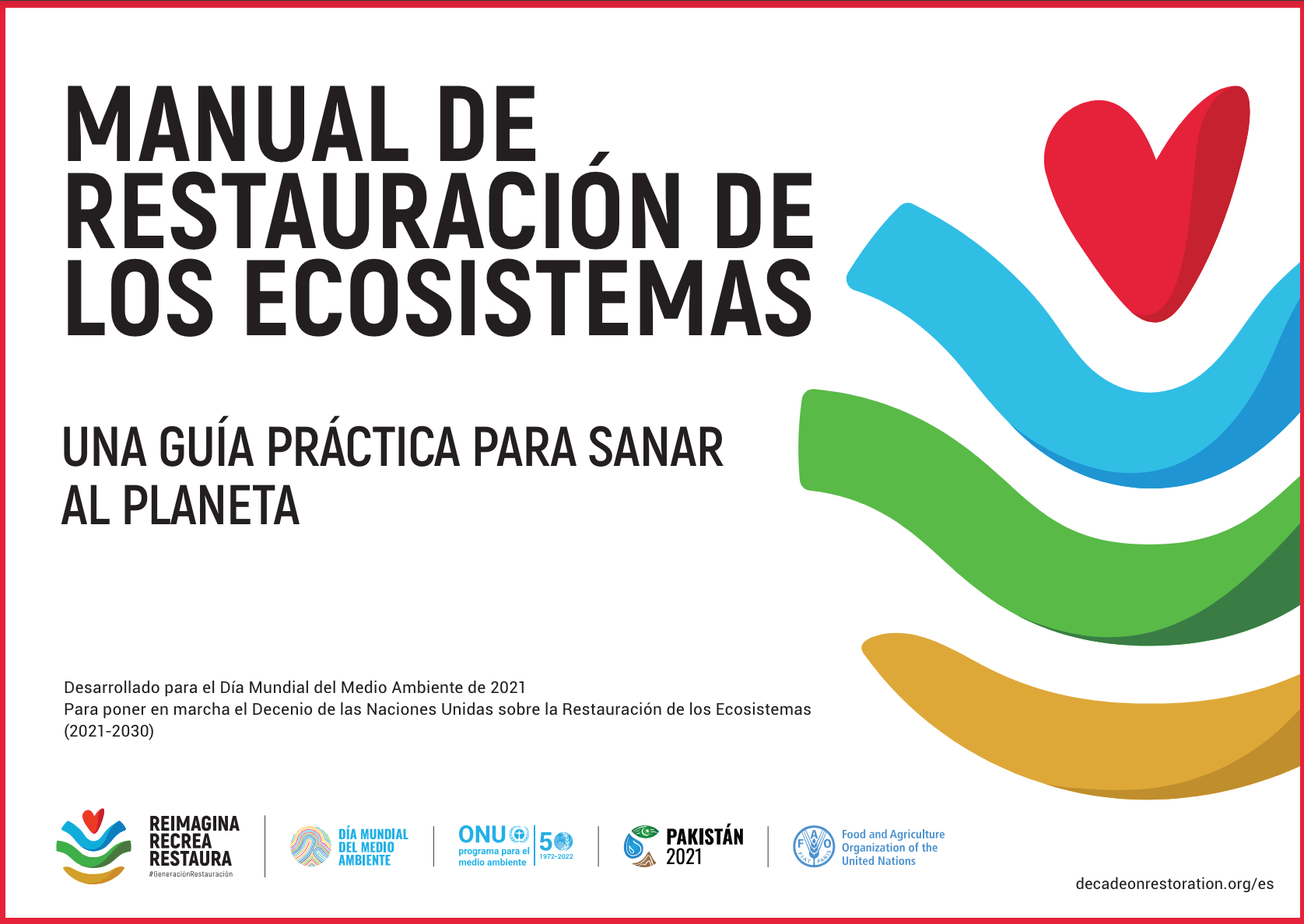
Detalles
| The health of people and the planet depends on the ecosystems on which we all depend. Bringing degraded ecosystems back to life – for example, by planting trees, cleaning up riverbanks, or simply giving nature space to recover – increases their benefits to society and biodiversity. If we do not restore ecosystems, we will not be able to achieve the Sustainable Development Goals, the Global Biodiversity Framework or the Paris Climate Agreement. But ecosystems are also complex and highly varied, and their restoration requires careful planning and patient application. To encourage the recovery of ecosystems everywhere, the United Nations Environment Programme (UNEP) has developed a practical guide for ecosystem restoration. Published at the start of the UN Decade on Ecosystem Restoration 2021-2030, the Ecosystem Restoration Scenario Book provides an introduction to the range of actions that can slow and halt ecosystem degradation and foster ecosystem recovery. Designed for all individuals and stakeholder groups, the guide outlines three pathways to engage in ecosystem restoration during the UN Decade and beyond:
|
Recursos relacionados
Nature Target Setting Framework for Asset Managers and Asset Owners
This document is a beta version of the Nature Goal-Setting Framework guidance report for Asset Managers and Asset Owners, developed…
Guide to the Corporate Sustainability Reporting Directive (CSRD)
The guide details the new features of the new Sustainability Reporting Directive (CSRD) with respect to the new Directive on…