

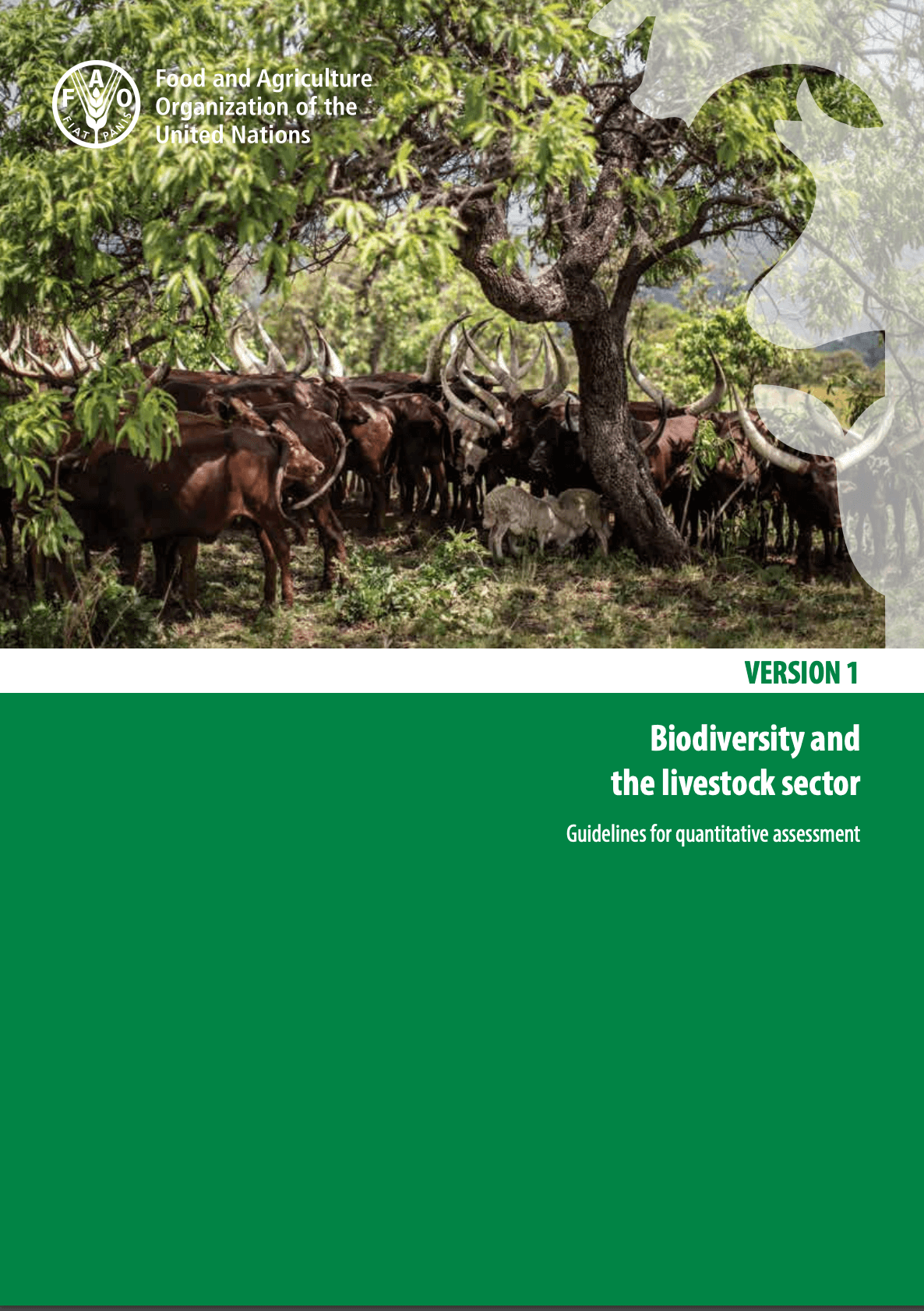
Detalles
| The aim of the methodology developed in these guidelines is to introduce a harmonised international approach to assessing the impacts of livestock farming on biodiversity. The livestock sector is one of the main users of natural resources (especially land) and a major contributor to pollution (e.g. causing nutrient losses, increasing greenhouse gases), making it one of the sectors with the greatest impact on biodiversity. At the same time, livestock farming is one of the few sectors that not only has a negative impact on biodiversity, but also a positive one, so it can act on two levers to improve and maximise profits. |
Recursos relacionados
Practitioner Guide to Calculating Corporate Environmental Impact
The purpose of this guide is to demonstrate how to derive the valuation of the monetary impact related to impacts…
An Investor’s Guide to Nature and Biodiversity Risks and Impacts
For many investors, the biggest challenge when accounting for biodiversity risk is knowing where to start. Biodiversity loss has many…
Mainstreaming Biodiversity into Renewable Power Infrastructure
As countries step up climate action, they face the challenge of scaling up renewable energy while tackling biodiversity loss.Moving away…