

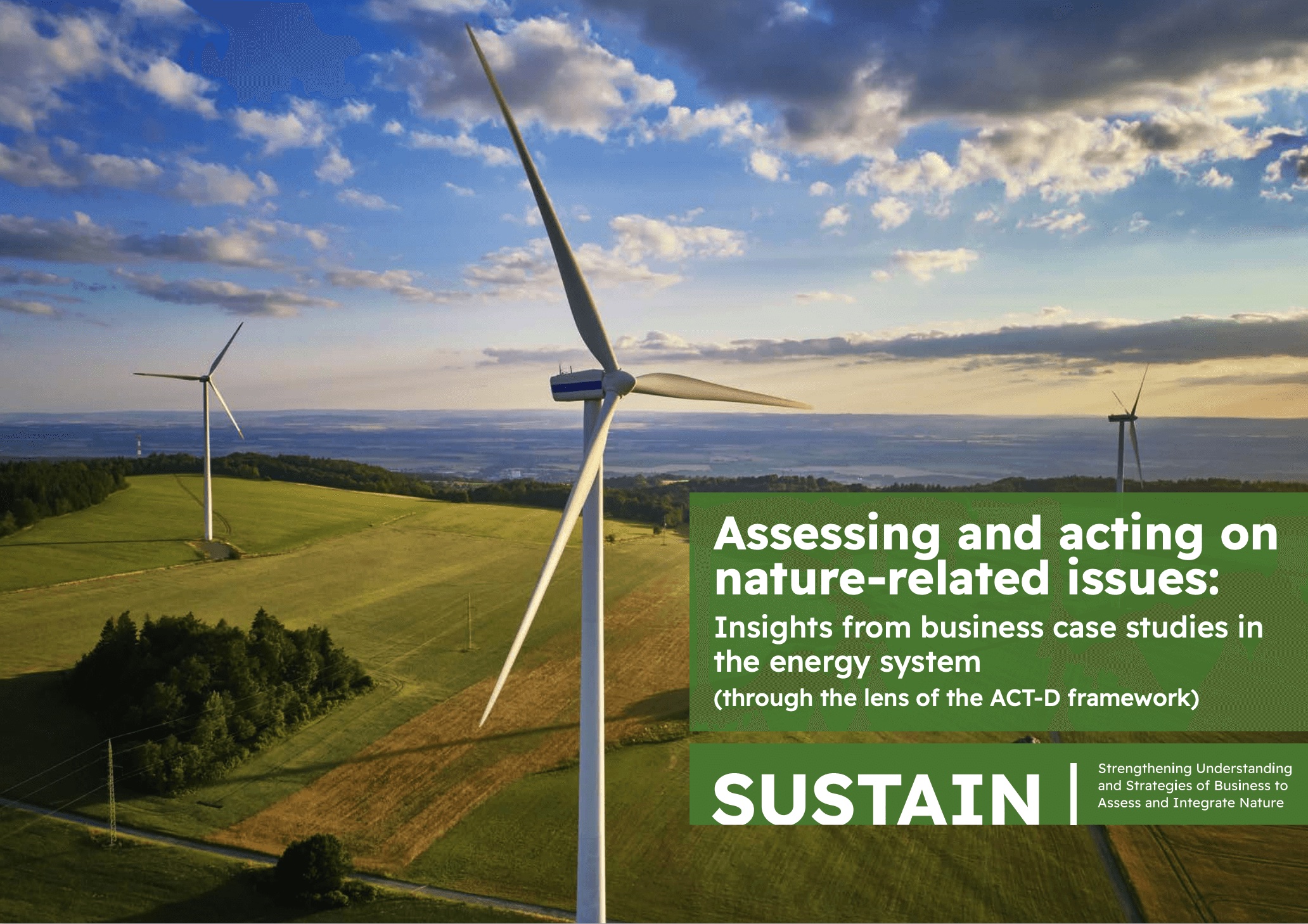
Assessing and acting on nature-related issues. Insights from business case studies in the energy system
Detalles
The European Horizon SUSTAIN project – Strengthening Understanding and Strategies of Business to Assess and Integrate Nature – which is funded by the European Union's Horizon 2020 research and innovation programme, under the grant agreement, aims to provide companies, financial institutions and agencies with the knowledge and resources needed to better understand, assess and control dependencies and impacts on the nature of the activities of the European Union. different sectors of the economy.
The paper Assessing and acting on nature-related issues: Insights from business case studies in the energy system presents case studies from three energy companies (Iberdrola, Equinor and CLP) that show their unique approaches to integrating nature-related considerations into their operations. By exploring these case studies, companies in the energy sector can gain inspiration and guidance on how to start assessing and managing their environmental impacts effectively. The publication can provide support to sustainability and nature teams within companies, civil society organizations and financial institutions investing in the energy sector.
The case studies of energy system companies in the paper accompany similar documents on agri-food and built systems. Each of these documents presents how companies work to identify and assess nature-related issues in line with the High-Level Business Actions on Nature framework to assess, engage, transform and disclose (ACT-D), Transform and Disclose (ACT-D).
While the four steps of ACT-D are addressed, the main focus is on the initial step, "Assess," emphasizing the importance of companies systematically addressing dependencies, impacts, risks, and opportunities (DIRO). In this way, companies are more likely to develop a credible nature strategy, in line with the It's Now for Nature campaign, and will be well on its way to contributing to the Global Goal for Nature to halt and reverse nature loss by 2030 by 2020, and achieve full recovery by 2050.
Recursos relacionados
Balancing Bankability and Integrity: Fostering Investment-Ready Natyre-Based Solutions
The report explores the opportunities and challenges of private financing for nature-based solutions (NbS).
Forest Sector Nature-Positive Roadmap Phase I: A shared definition of nature-positive
This roadmap provides a structured approach to assessing nature's impacts and dependencies along the forest sector value chain. Within the…
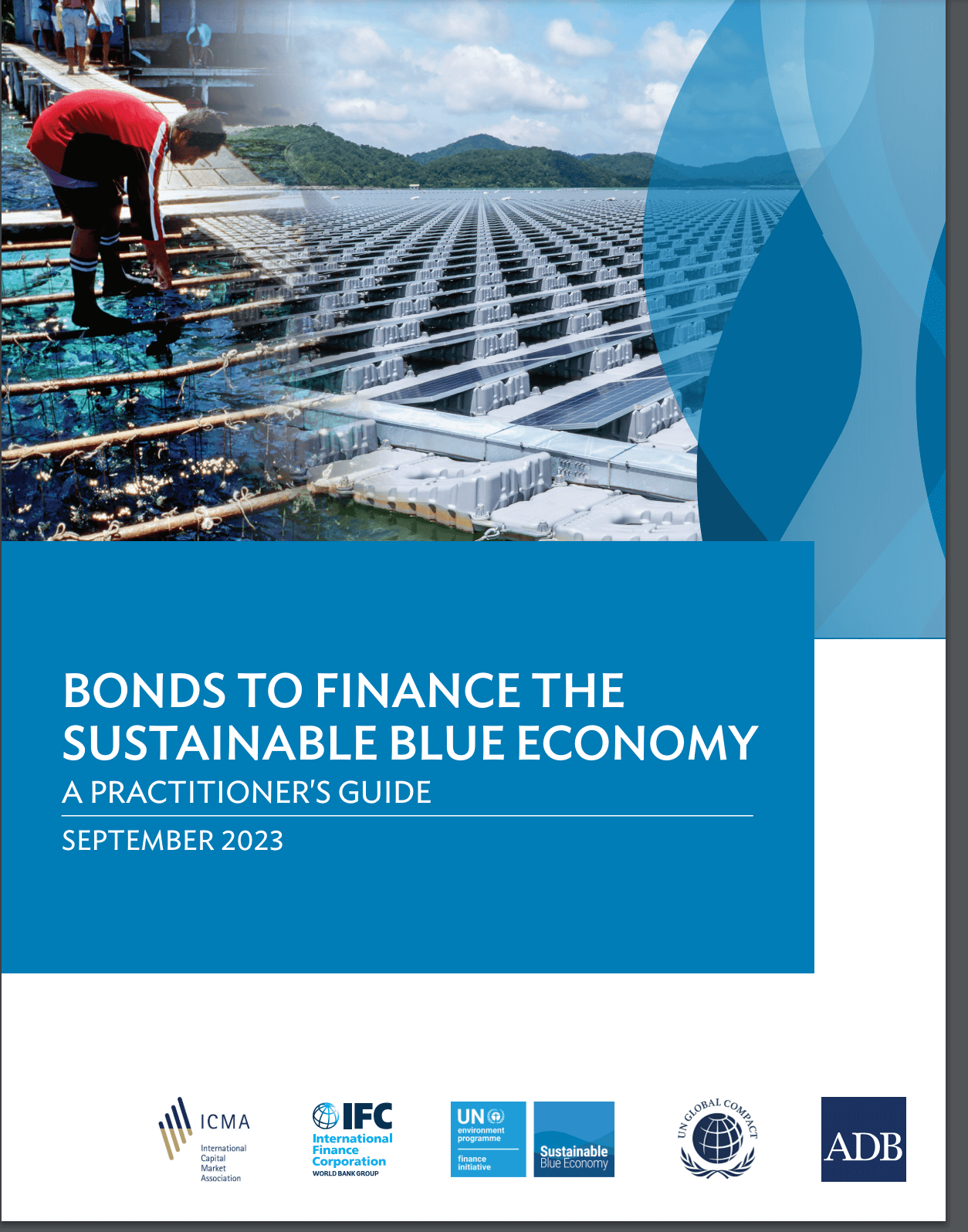
Bonds to Finance the Sustainables Blue Economy. A Practicioner’s Guide
The International Capital Markets Association (ICMA), together with the International Finance Corporation (IFC), a member of the World Bank Group,…