

AECOM TNFD Pilot: Nature risk screening for multiple infrastructure projects across Asia
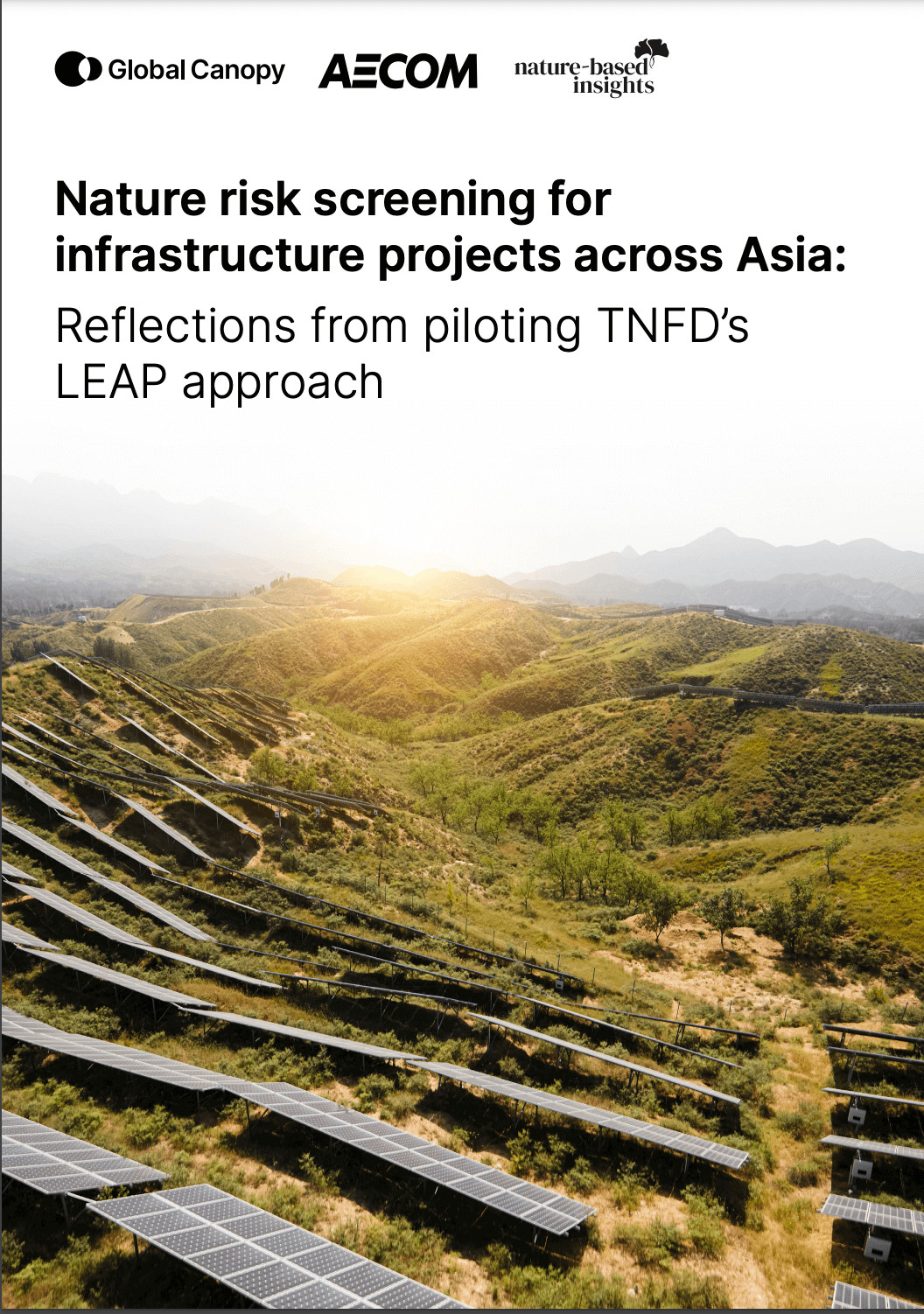
Detalles
| The TNFD has developed a series of recommendations and guidelines for organizations to identify, assess, manage and, where appropriate, disclose their dependencies, impacts, risks and opportunities in relation to nature. Its recommendations and guidance help organizations integrate nature into decision-making and ultimately support a shift in global financial flows from nature-negative to nature-positive outcomes. With the support of Nature-Based Insights and Global Canopy, AECOM piloted the TNFD's LEAP approach to identifying and assessing its nature-related issues. The pilot project focused on conducting a high-level review of AECOM's infrastructure projects in South Asia (India, Andaman Islands and Nicobar), South-East Asia (Singapore, Thailand, Malaysia, Philippines, Myanmar, Vietnam, Indonesia) and East Asia (Taiwan, Hong Kong). Infrastructure projects are located in biomes that include: tropical and subtropical moist broadleaf forests; tropical and subtropical dry broadleaf forests; savannas and shrubs; inland wetlands; and mangroves. One of the main findings of the pilot project was the potential benefit of a high-level selection process of suitable project sites and the appropriate design of the Environmental Impact Assessments (EIAs) of the projects to better ensure that a net biodiversity gain is achieved. |
Recursos relacionados
Experience and reflections from piloting the TNFD’s LEAP approach on an infrastructure development and finance organisation’s portfolio
Private Infrastructure Development Group (PIDG), an infrastructure developer and investor mobilizing private investment in climate-resilient, sustainable and inclusive infrastructure across…
70 responses to biodiversity loss: the IPBES Nexus Assessment
The Intergovernmental Platform on Biodiversity and Ecosystem Services (IPBES) has launched the Assessment Report on the Interlinkages between Biodiversity, Water,…
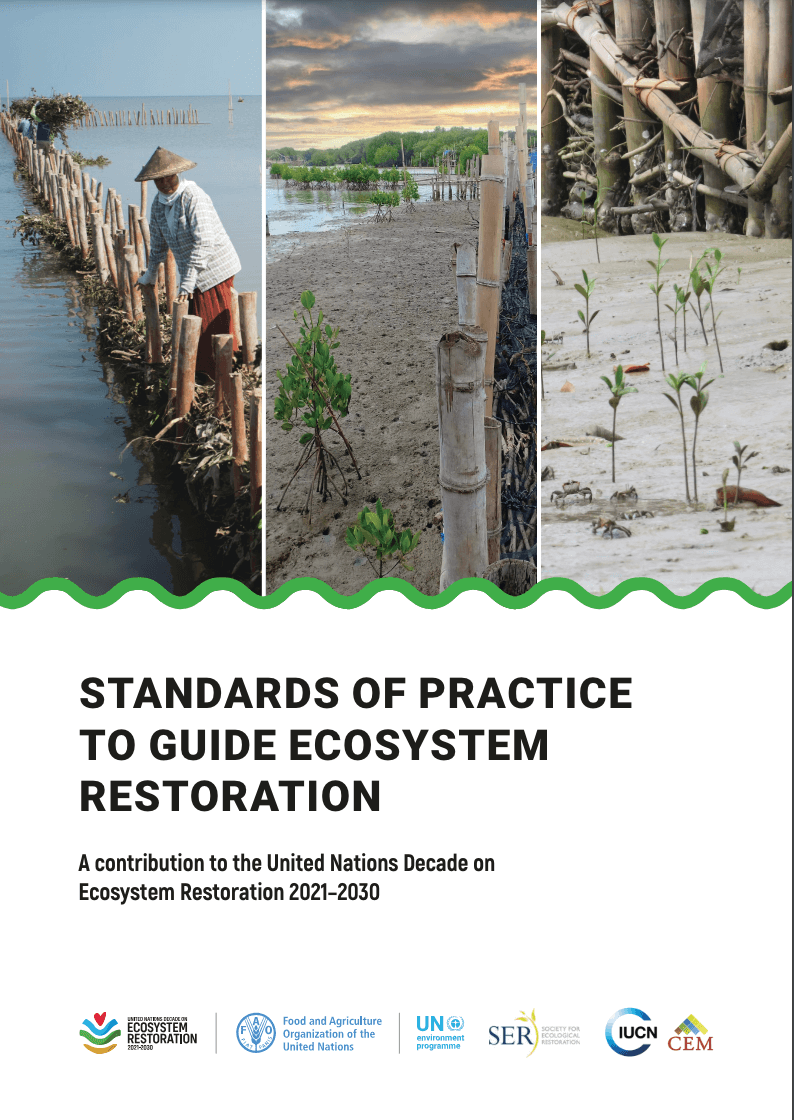
Standards of practice to guide ecosystem restoration: A contribution to the United Nations Decade on Ecosystem Restoration 2021-2030
The United Nations Decade on Ecosystem Restoration 2021-2030 aims to prevent, halt and reverse ecosystem degradation and restore biodiversity and…