

Detalles
| Environmental risks continue to dominate the risk landscape across all three time periods. Two-thirds of respondents rank extreme weather as the top risk most likely to present a material crisis on a global scale in 2024, with the warming of the El Niño-Southern Oscillation (ENSO) cycle expected to intensify and persist until May this year. It is also considered the second most serious risk over a two-year period and, as in the one-year ranking, almost all environmental risks are in the top 10 in the long term. However, respondents disagree on the urgency of environmental risks, in particular, on biodiversity loss and ecosystem collapse and critical Earth systems change. Younger respondents tend to rank these risks much higher compared to older age groups over a two-year period, with both risks ranking in the top 10 in the short term. For its part, the private sector highlights these risks as the main long-term concerns, unlike respondents from civil society or governments, who prioritize them in the short term. This dissonance between key decision-makers implies suboptimal alignment and decision-making, which increases the risk of missing key moments of intervention, resulting in long-term changes in planetary systems. |
Recursos relacionados
Country Report 2023: Nature and Biodiversity in the Built Environment
The planetary limit of biodiversity, both in terms of species disappearance – genetic loss – and functionality, presents a much…
Green Deal Barometer 2024
The fourth edition of the European Green Deal Barometer, the annual survey of the Institute for European Environmental Policy (IEEP),…
2026
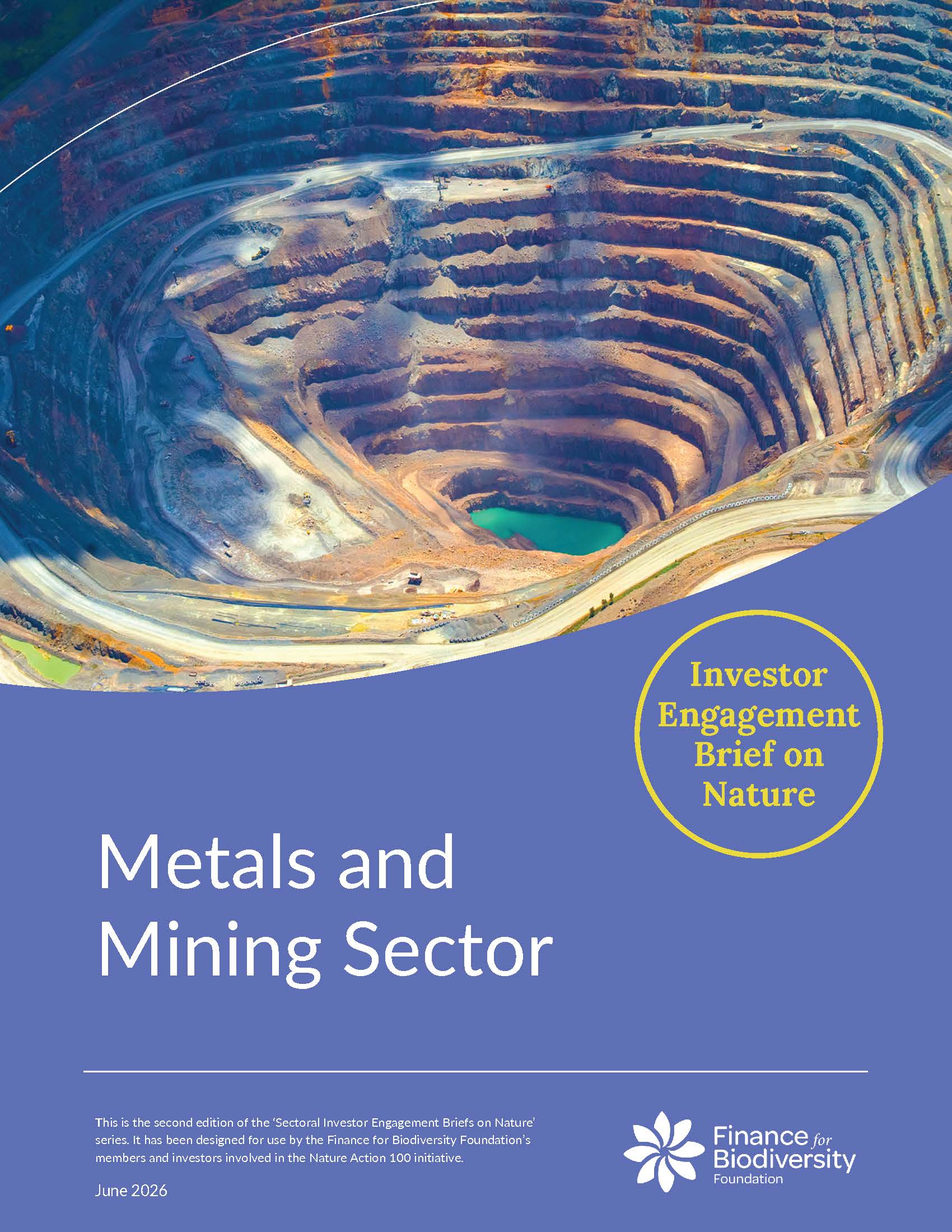
Investor Engagement Brief on Nature: Metals & Mining
Esta guía analiza la estrecha relación entre la actividad minera y la biodiversidad, destacando que, aunque los minerales son esenciales…