

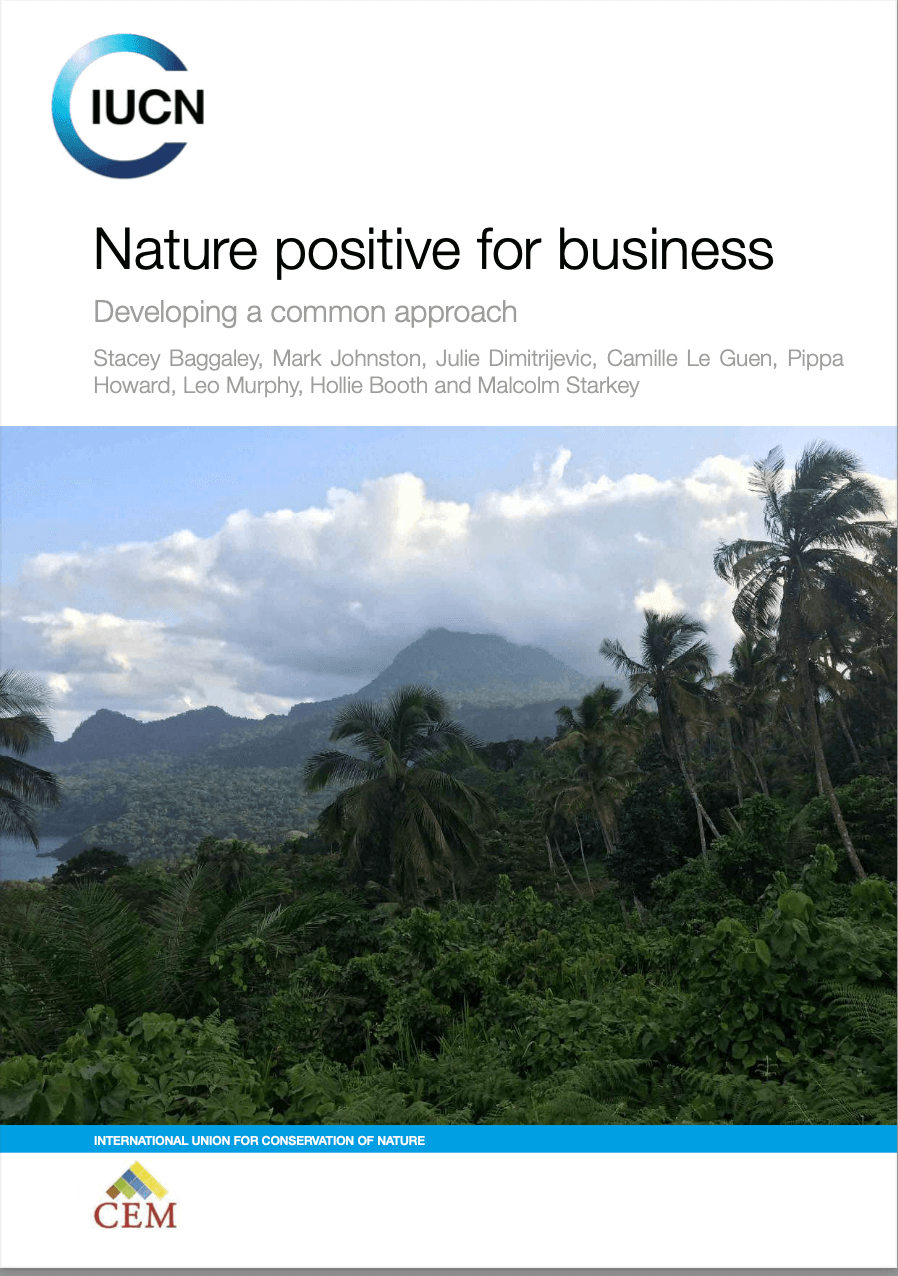
Detalles
| Nature, which encompasses the areas of water, biodiversity, soil/land and air/climate, continues to decline with significant negative impacts on society. Companies need to understand their impacts and dependencies on nature, manage their nature-related risks, and incorporate the value of nature into their decision-making to identify and implement opportunities that contribute to the overall goal of being nature-positive. Achieving this goal requires collective action across sectors, value chains and landscapes. Fundamentally, the positive for nature represents systemic and transformative change rather than a "remodeling" of current practices. Utilizing prioritization approaches can allow companies to identify areas where they can make a material and significant contribution early on as systemic and transformative change is adopted across the enterprise. This report details principles, definitions, and recommended actions that can be used in decision-making by businesses, financial institutions, and civil society, in order to develop specific guidelines, policies, or plans that contribute to a global goal for nature and to the 2030 mission of the Kunming-Montreal Global Biodiversity Framework. |
Recursos relacionados
Developing a Corporate Biodiversity Strategy: A primer for the fashion industry
Biodiversity, the living component of nature, is under threat. World diversity is experiencing a precipitous decline. Businesses and society will…
2023
Biodiversity Basics: Get up to speed!
La biodiversidad es esencial para los procesos que sustentan toda la vida en la Tierra y constituye la base de…
Guidance for applying absolute environmental sustainability assessment on activities at different scales (BETA version)
This guide is based on academic studies and is structured in three phases: estimation of environmental impact, allocation of carrying…