

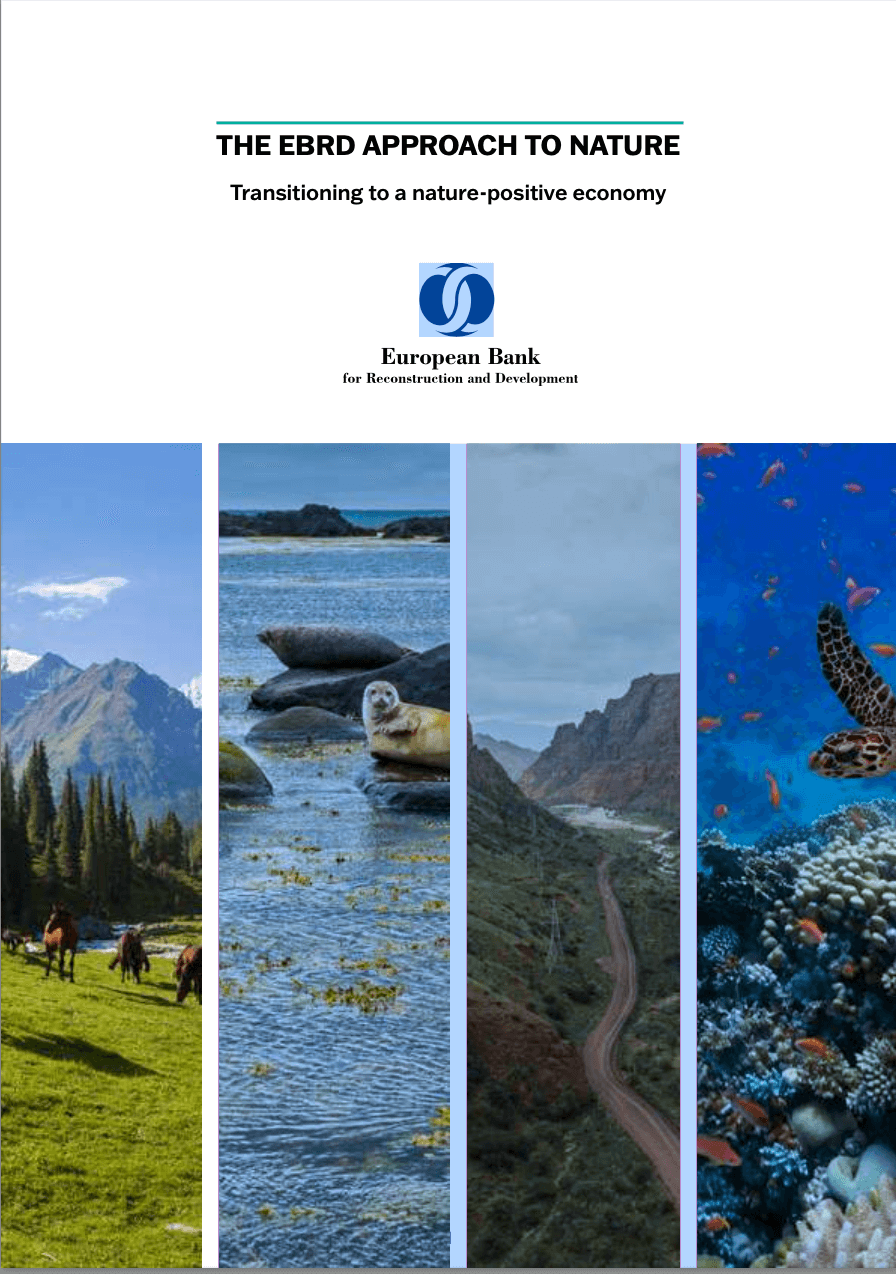
Detalles
| The European Bank for Reconstruction and Development (EBRD) today presented its approach to nature as part of Nature Day at COP28 in Dubai. This approach is a statement on how the Bank can generate more benefits for nature and play its role in halting and reversing biodiversity loss by 2030. Nature is in crisis. According to the Stockholm Resilience Centre, of the nine processes that regulate stability and resilience on Earth, six have exceeded the limit that defines their safe operation zone. In that sense, the climate crisis is only one dimension of the nature crisis; Pollution, freshwater, land use and biodiversity are also in critical states. The global decline in nature and biodiversity is largely due to market failures, including the overexploitation of public goods, poor pricing of nature in economic systems, and a lack of adequate regulation to correct this. Addressing the biodiversity crisis is therefore in line with the transition mandate of the European Bank for Reconstruction and Development (EBRD). The EBRD will leverage its decades of experience in environmental protection and its position as a private-sector-focused multilateral development bank (WDB), guided by the goals and targets of the Kunming-Montreal Global Biodiversity Framework to deliver on the commitments set out in the MDBs' joint declaration at COP26 on nature, people and planet. |
Recursos relacionados
Nature-related Financial Risks: a Conceptual Framework to guide Action by Central Banks and Supervisors
This report contains the beta version of an NGFS Framework for nature-related financial risks. The Framework aims to create a…
Making Nature Market Works
The Task Force on Nature Markets was launched in April 2022 to identify and highlight the potential and dangers of…
Why nature matters: Nature-related risks and opportunities for insurance underwriting
This report seeks to raise awareness of the relevance of nature-related risks and opportunities for insurers to explore how the…