

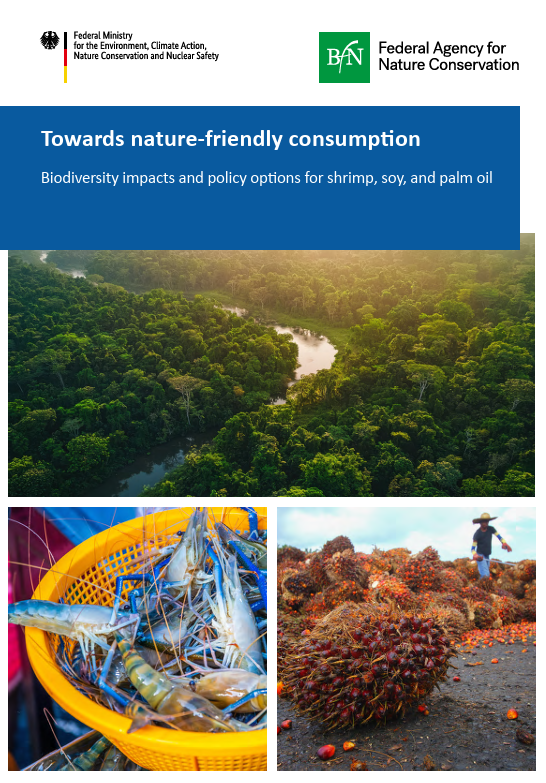
Towards nature-friendly consumption – Biodiversity impacts and policy options for shrimp, soy, and palm oil
Detalles
Este estudio aborda cómo el consumo de la UE afecta a la biodiversidad mundial, centrándose en tres productos básicos de gran impacto: el camarón, la soja y el aceite de palma. Destaca las crisis entrelazadas de la pérdida de biodiversidad y el cambio climático, el desplazamiento sistémico de las presiones medioambientales, los desequilibrios de poder en el comercio mundial, los límites de las soluciones técnicas y la necesidad de centrarse en la suficiencia y la equidad. El estudio también presenta opciones políticas y aboga por estrategias integradas que transformen los patrones de consumo para proteger la biodiversidad, defender la equidad para los países productores y promover la sostenibilidad mundial.
Recursos relacionados
Adapting central bank operations to a hotter world: current progress and insights from practical examples
The Network for Greening the Financial System (NGFS) has published a report on adapting central bank operations to a warmer…
Challenges in the implementation of regenerative agriculture practices
This event highlights a crucial agricultural shift that aims to revolutionize the way we produce food while improving sustainability and…