

Detalles
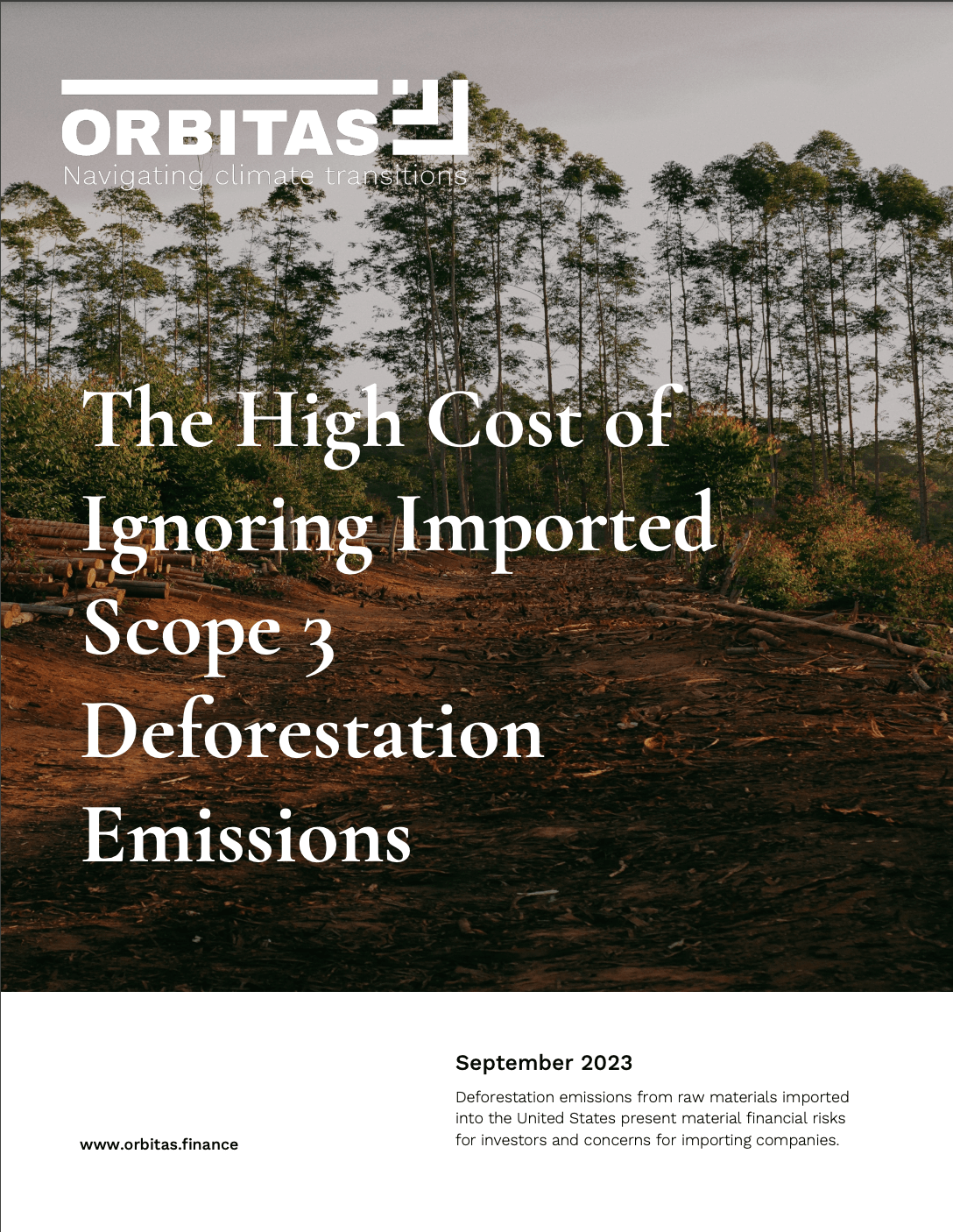
This Orbitas report, developed in collaboration with AidEnvironment and Profundo, sheds light on the significant climate-related financial risks arising from deforestation emissions linked to products imported into the United States. By revealing the high levels of value at risk, this analysis makes a strong case for investors to proactively manage the risks of deforestation emissions in the Scope 3 supply chain associated with products such as palm oil, rubber, and beef in their portfolios.
The total at-risk value of deforestation emissions associated with imported goods at forest risk ranges from $7.28 billion to $114.98 billion.
The gross profits of the goods assessed could decrease between 366 million dollars and 6.9 billion dollars.
Retail prices for imported beef could increase by 700% if the climate costs of emissions from deforestation were factored into pricing.
Scope 3 emissions from deforestation for the production of goods imported into the United States totaled 21.24 million tons of CO2 in 2019, exceeding 2020 emissions from countries such as the Democratic Republic of Congo, Nicaragua, and Panama.
Prior to the U.S. Securities and Exchange Commission's final climate-related financial disclosure rule, it is critical to understand the magnitude of climate-related financial risks in Scope 3 emissions. Below is a sample of our key findings from the report that identifies the materiality and potential scale of climate-related financial risks investors face due to Scope 3 deforestation emissions.
Recursos relacionados
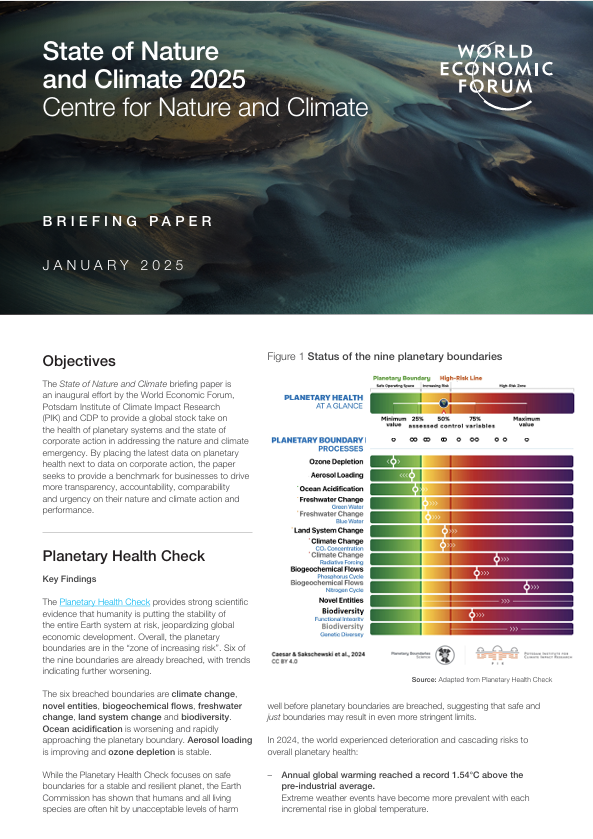
State of Nature and Climate 2025 Centre for Nature and Climate
In this report, the World Economic Forum, the Potsdam Institute for Climate Impact Research (PIK) and CDP take a global…
Glossary: The Role of Business in Transforming Food Systems
Food and agriculture are not only the biggest contributors to climate change and biodiversity losses, but they are also under…