

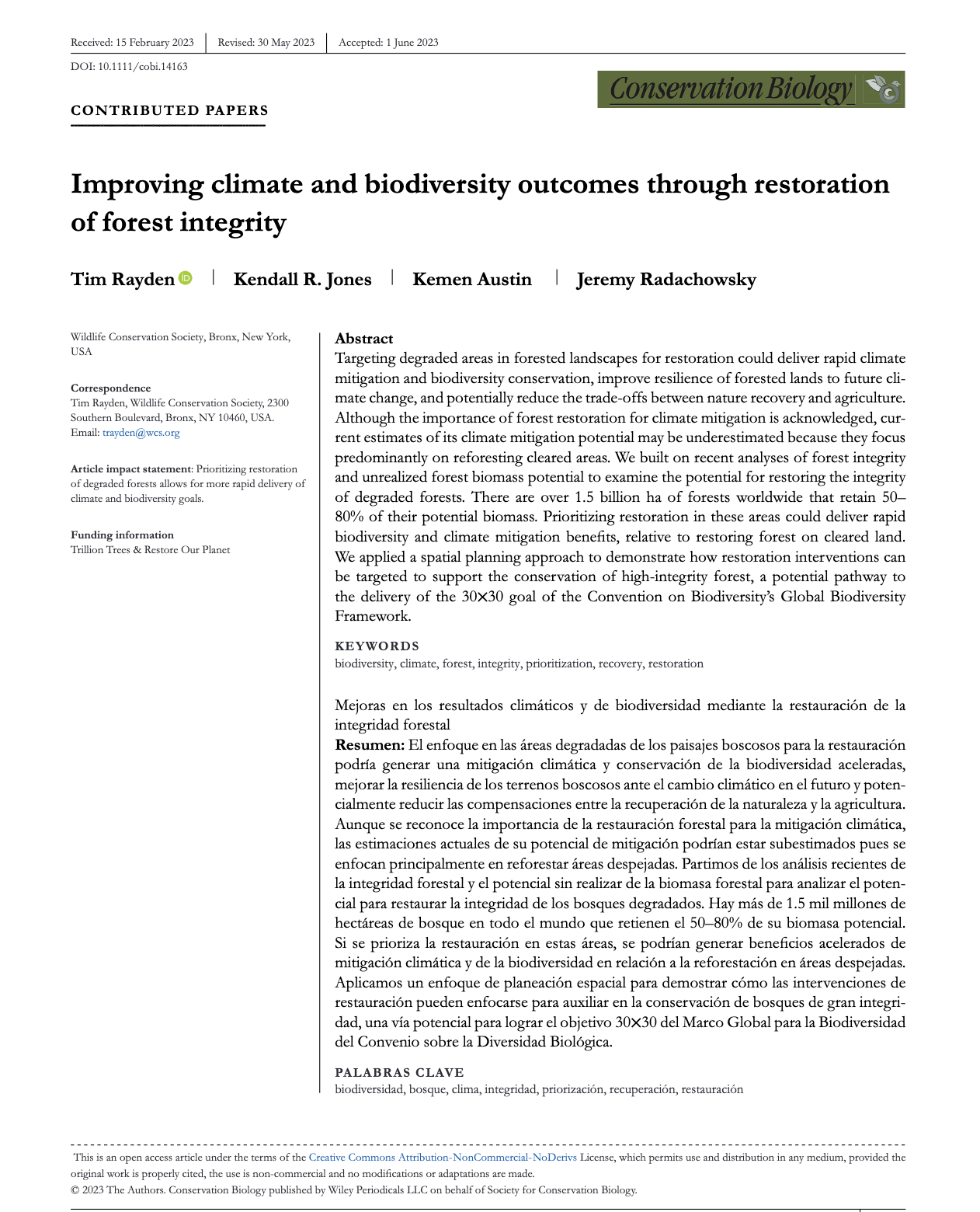
Improving climate and biodiversity outcomes through restoration of forest integrity
Detalles
| This publication maps out the potential restoration zones. Research and practice so far has focused mainly on the reforestation of cleared land. Researchers have found that degraded, but not cleared, forests account for 1.5 billion hectares of potential land for restoration, which is almost the size of Russia. The map and prioritization method developed by this study will help governments and land managers decide on the HOW and WHERE it is most appropriate to carry out restoration projects. |
Recursos relacionados

Emissions Gap Report 2024
The Emissions Gap Report is UNEP's annual institutional report that is published ahead of the annual climate negotiations. The publication…