

Detalles
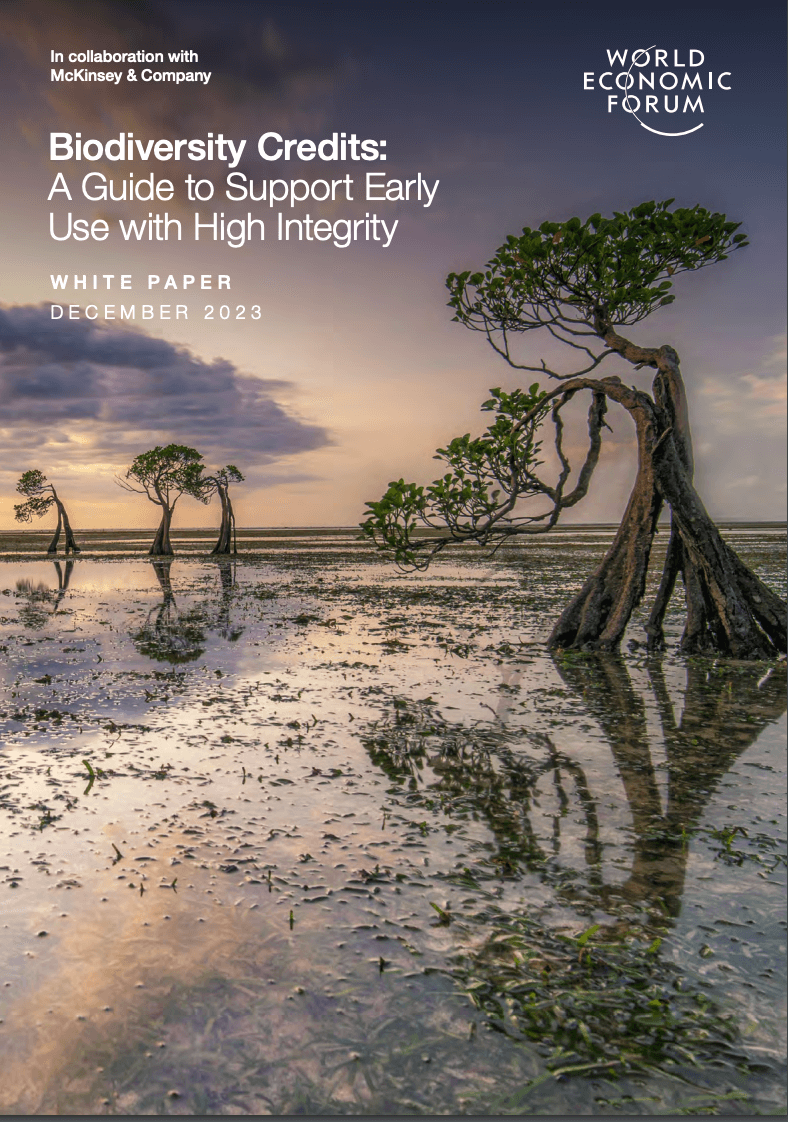
| This joint report produced by the World Economic Forum and McKinsey & Company Sustainability covers some of the ways in which companies could support value creation through biodiversity credits. The report identifies four interrelated causes of use: - improve carbon credits for better outcomes in nature, - access ecosystem services as inputs, - contribute to the recovery of nature beyond its own impact, and - Offer projects linked to the recovery of nature. Biodiversity credits are not a magic bullet Improper use of biodiversity credits can harm nature and local communities, and expose buyers to strategic, operational, and reputational risks: - Improper use could take the form of greenwashing, for example, if it is perceived to replace significant efforts to avoid and reduce the impact on nature. - Attention to stakeholders about uses and outcomes can expose companies to substantial risks. - The use of low-integrity credits may also risk further degradation of nature. The value they can create depends largely on the level of transparency, credibility and alignment with principles of high environmental and social integrity. If the conditions are met, they have great potential to help us truly live in full harmony with nature by 2050. |
Recursos relacionados
Sustainable Financing for SMEs in Spain
Sustainable finance involves investing in the transition to greener business activities, addressing risks and opportunities in this process. But for…
Integrating biodiversity into private equity. Feedback and case studies
The integration of biodiversity issues by private capital actors is a major challenge, in response to new regulations and the…