

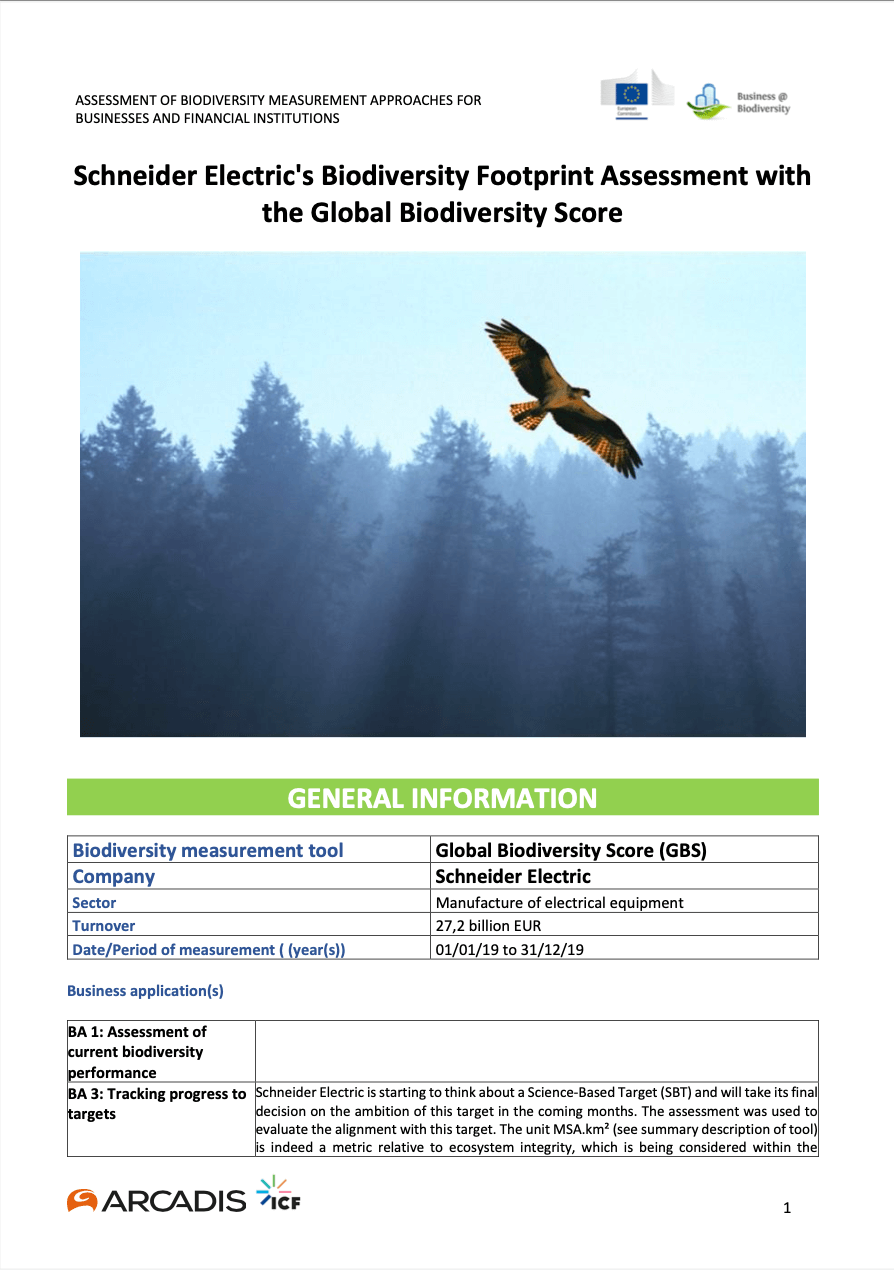
Schneider Electric’s Biodiversity Footprint Assessment with the Global Biodiversity Score
Detalles
| This case study details Schneider Electric's journey towards quantifying the risks and opportunities related to biodiversity across its value chain. The use of a Global Biodiversity Score tool made it possible to identify and quantify the areas where most impacts occur and to prepare the profound transformations necessary to avoid and reduce them. In the case of Schneider Electric, these were greenhouse gas emissions, wood from pallets and cardboard (packaging) and minerals extracted (embedded in its products). The assessment required between 40 and 80 person-days by consultants (CDC Biodiversité & PRé Sustainability) and about the same amount by Schneider Electric. Three days of training were required for the tester, and the user interface was relatively simple. Therefore, using these assessment tools requires more investment than simpler screening tools (such as ENCORE), but it unlocks more advanced business applications. While the assessment allowed for quantification of scope 1, 2 and (for pressure) scope 3 impacts upstream and downstream, it only covered the condition of the ecosystem and not the extinction of species or genes, nor did it cover marine biodiversity. How did the evaluation influence Schneider Electric's decisions? He committed to achieving a Scope 1 target with no net losses by 2030 and contributed to his strategic thinking around purchasing, packaging, and biodiversity management in direct operations (more in the comments). This analysis was conducted in 2020, and since then, several tool and data limitations have been at least partially overcome. However, key lessons and conclusions on costs, strengths and weaknesses remain broadly valid and can serve as a reference for others interested in assessing the risks and opportunities related to their operations. |
Recursos relacionados

Mainstreaming Biodiversity into Renewable Power Infrastructure
As countries step up climate action, they face the challenge of scaling up renewable energy while tackling biodiversity loss. Moving…
Every Job is a Nature Job – Business Development
This report offers recommendations for professionals who want to ensure that nature is taken into account when identifying opportunities and…