

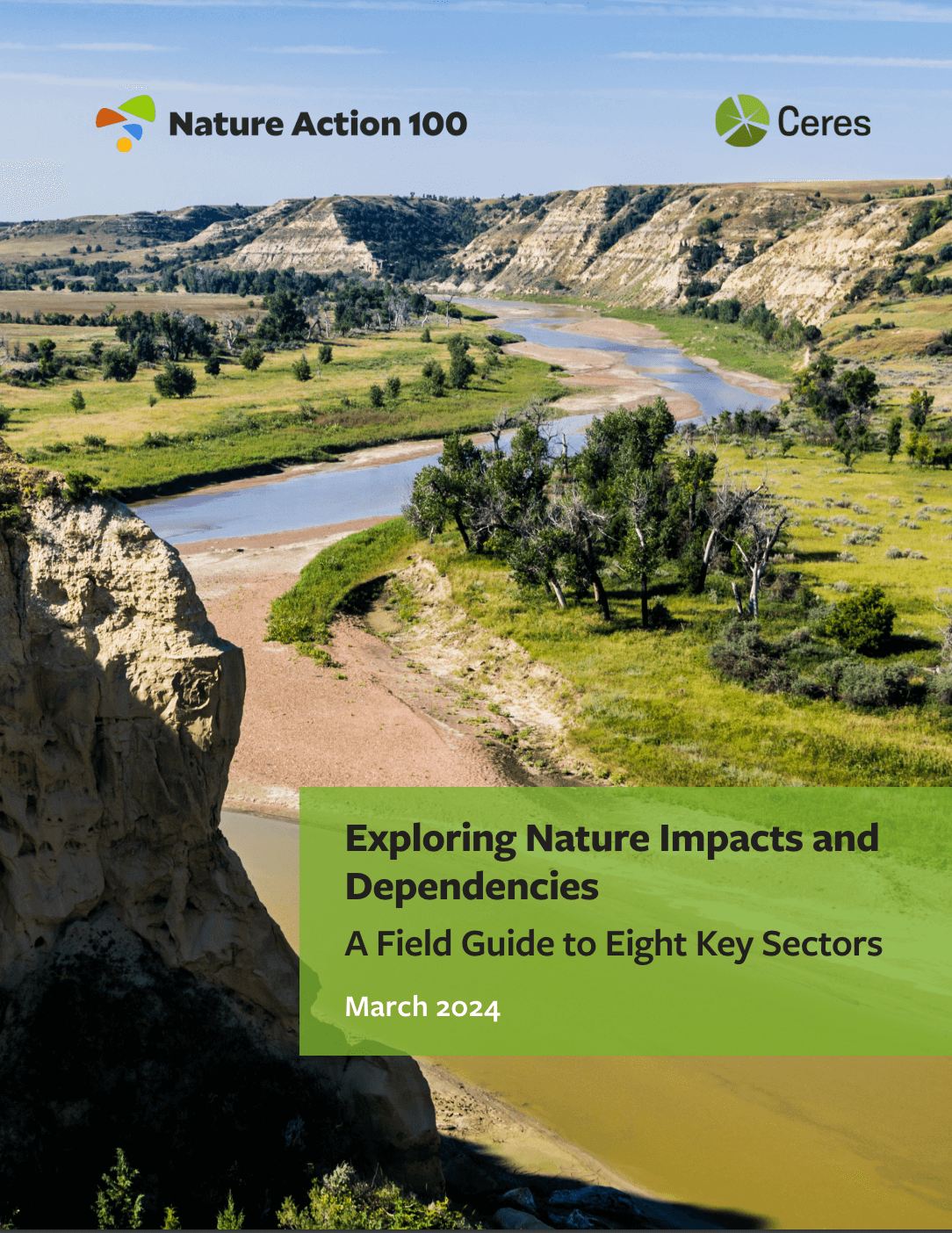
Exploring Nature Impacts and Dependencies: A Field Guide to Eight Key Sectors
Detalles
Urgent action is needed to halt and reverse nature loss. Nature and biodiversity underpin all life systems on Earth. Nature is not only fundamental to human well-being, but also to the economic stability and development of humanity. More than half of global GDP is highly dependent on nature, so its loss poses a significant risk to businesses and investors. Businesses across the economy are exposed to great physical risks because they depend on nature for valuable resources, such as timber, water, and agricultural products, as well as crucial ecosystem services, such as pollination and regulating water flows. However, many companies are compounding these risks by degrading the ecosystems in which they operate or source raw materials, driving changes in land, water and ocean use, resource exploitation, climate change, pollution and the spread of invasive species. Companies that fail to address their impacts on nature also face increasing transition risk in the form of pressure from regulators and other stakeholders. For example, the European Union's Corporate Sustainability Reporting Directive (CSRD) sets out broad requirements for companies' disclosure of impacts on biodiversity and nature. Under the EU Corporate Sustainability Due Diligence Directive, companies will also have to report on their business plans to reduce ecosystem degradation. Last year, the Taskforce for Nature-related Financial Disclosures (TNFD) published a series of recommendations. - Business as usual will only accelerate an already alarming rate of nature loss. - More than one million species are threatened with extinction, many of them in the next decade. - 75% of the land has undergone significant alterations. - 66% of the oceans are suffering negative impacts. - 87% of wetlands have been destroyed. - Indigenous peoples, who protect 80% of the world's biodiversity in forests, deserts, grasslands and marine environments, are increasingly threatened. - Nature plays a key role in the fight against climate change. Protecting and restoring forests and other natural ecosystems could provide up to a third of the climate mitigation needed to limit global temperature rise under the Paris Agreement. This guide gives investors the information they need to collaborate with companies in managing growing natural risks and creating long-term value. This report provides an overview of how companies in eight sectors, from chemicals to food, affect and depend on nature. The document includes eight individual files on each sector. The fact sheets explain the main industrial activities associated with the sector and how the activities of each sector depend on nature and have an impact on it. |
Recursos relacionados
The EU Taxonomy’s uptake on the ground
The EU Taxonomy, a classification system, is an important market transparency tool that helps direct investments towards the activities most…
Living in a world of disappearing nature: physical risk and the implications for financial stability
A thriving nature provides many benefits that sustain human well-being and the global economy. Unfortunately, intensive land use, climate change,…
The role of insurers in climate adaptation: strategies to protect people and nature
This event brought together experts, policymakers and industry leaders. Climate change has evolved from an imminent threat to an immediate…