

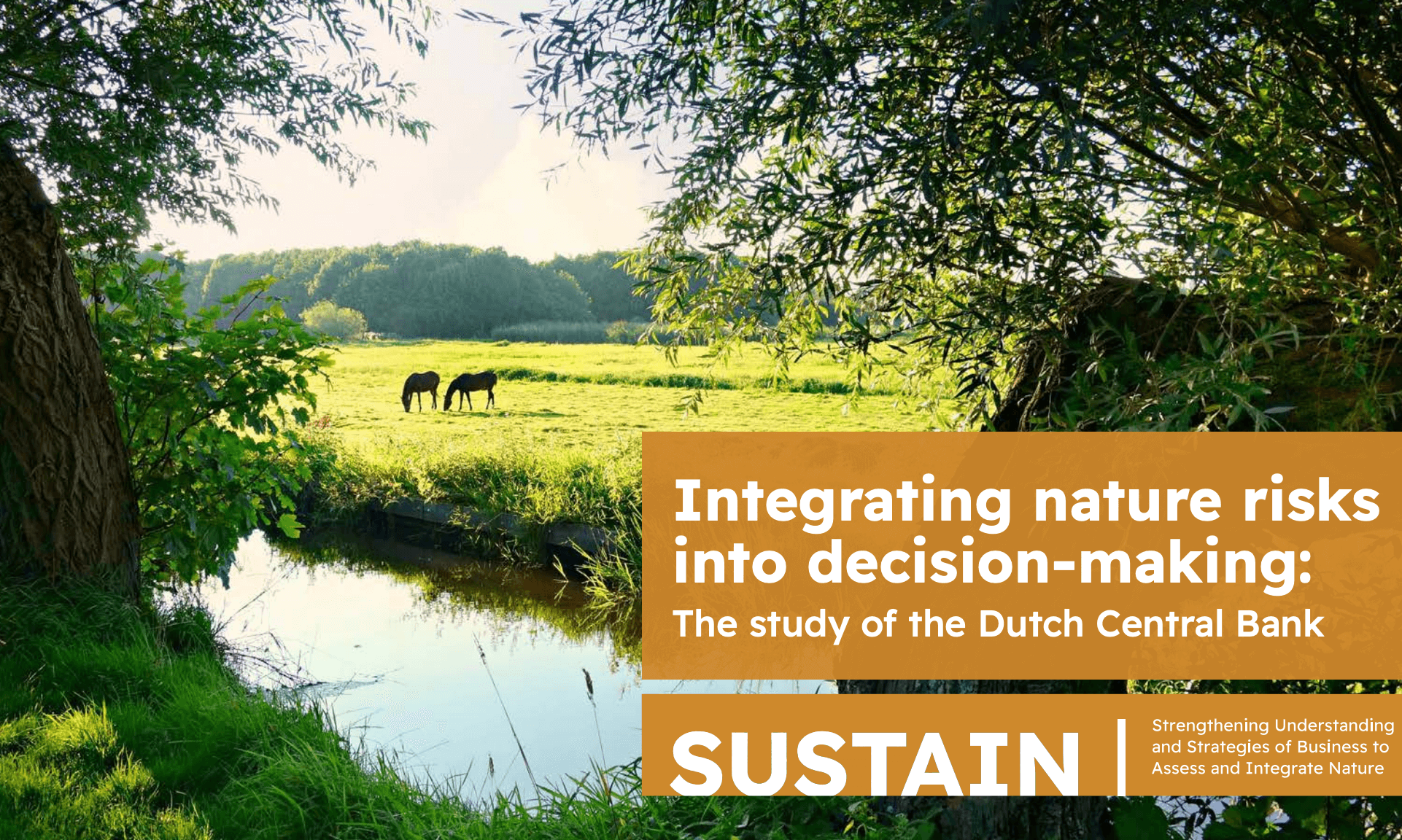
Integrating nature risks into decision-making: The study of the Dutch Central Bank
Detalles
| The degradation of our natural world poses a threat to our economies and human well-being ambitions currently expressed in the UN's Sustainable Development Goals. Ecosystems, species and the services they provide are highly threatened by economic activities, but at the same time by providing almost all goods and services. To achieve the goals set out in the Kunming-Montreal Global Biodiversity Framework, the whole of society, particularly business and finance, must halt and reverse its negative effects on nature and contribute to planetary well-being. Central banks and supervisors have a responsibility – or mandate – to ensure financial stability and identify long-term risks. If a systemic risk is identified, they influence national policies by advising governments and establishing relevant supervisory policies for financial institutions. They also indirectly influence the business sector by ensuring that financial institutions manage risks The Central Bank of the Netherlands (DNB) has proven to be a leading financial and regulatory institution for its integration of nature into policy and decision-making. DNB's research into risks related to the nature of nature can affect the stability of financial institutions, businesses, and the economy at large. The bank's investigation also revealed that Dutch financial institutions are exposed to the financing risks they offer through loans, investments and insurance. Natural risks could affect financial stability and therefore fall within the mandate of the Central Bank of the Dutch Central Bank. As part of its Sustainable Finance Strategy, DNB is taking steps to integrate sustainability risks, including nature, into all its core functions and engages with others, including policymakers, to contribute to the management of risks related to nature and financial systems. |
Recursos relacionados
Report on the 2023 Taxonomy Report
After two years of disclosure of information on Taxonomy, many questions arise about the usefulness of this information. This document…
2023
How to address biodiversity protection through environmental management systems
La biodiversidad es una de las áreas clave del EMAS y no hay que subestimar la importancia de su conservación…
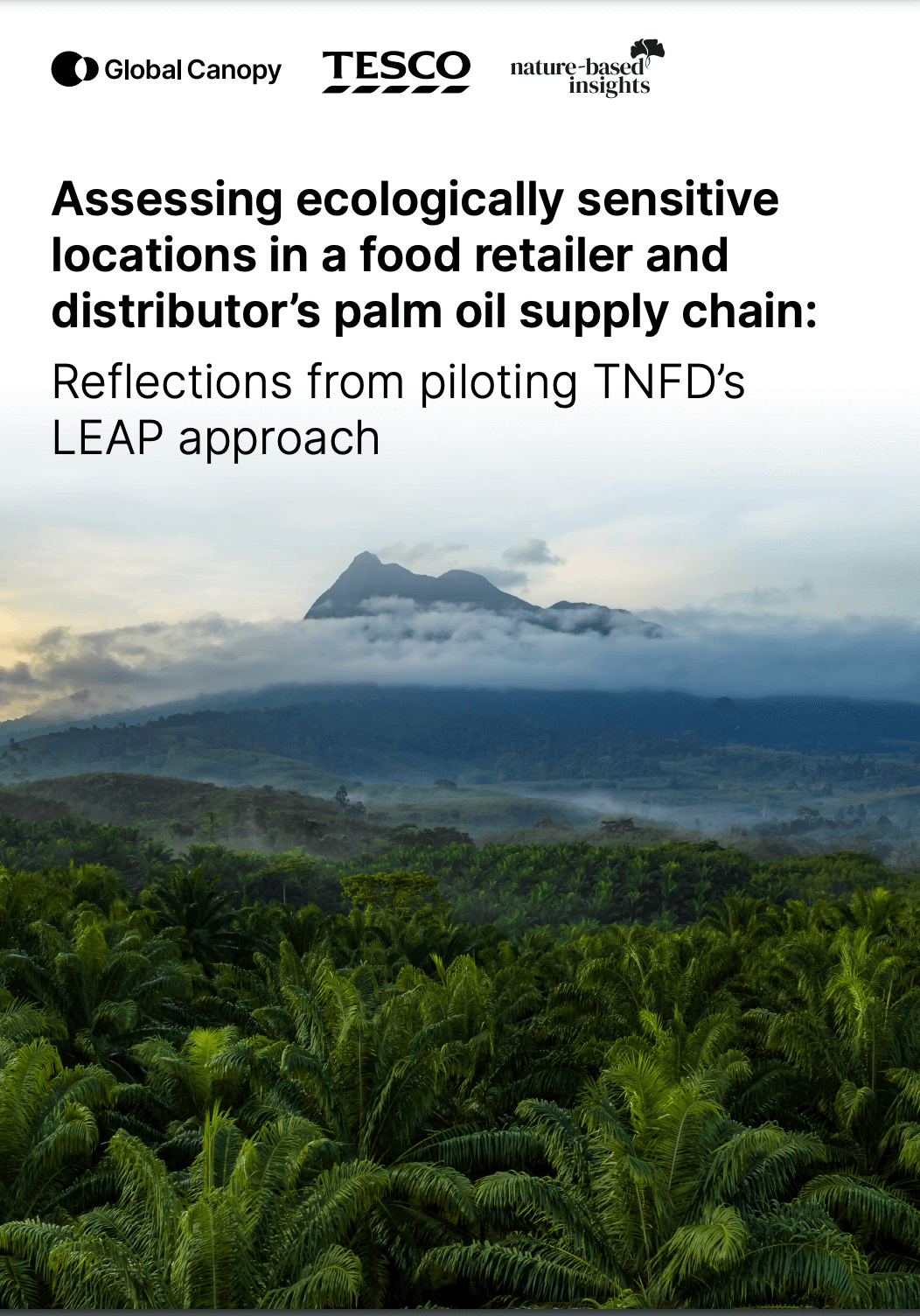
Tesco TNFD case study: Palm oil traceability and determining priority sourcing locations in Indonesia
Multinational food company Tesco participated in Global Canopy's Nature-Related Financial Disclosures (TNFD) Task Force pilot programme ahead of the launch…